
Qatar Official Stresses Future Skills Development to Drive Digital Inclusion at MWC26 Doha
Published Updated By Regional Desk
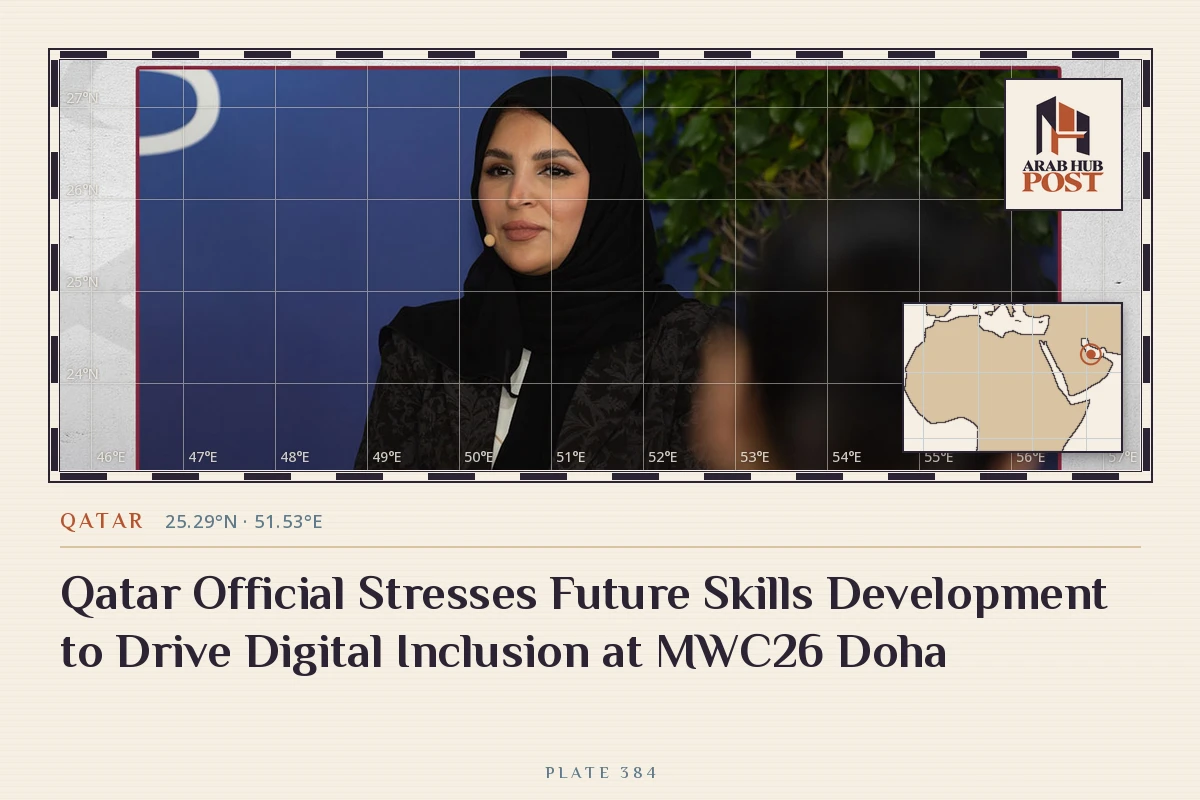
Qatar’s Ministry of Communications and Information Technology highlighted the critical role of future skills development in advancing digital inclusion during a panel discussion at MWC26 Doha on 8 November 2026. Duha Al Buhendi, Director of the Digital Society and Digital Competencies Department, addressed the session held under the conference’s IQ Era theme at the Doha Exhibition and Convention Center, which runs until 10 November.
Panel explores human capital in digital age
The discussion on digital inclusion and human capital was moderated by Euronews Executive Producer Leila Hamira and featured Dr. Abeer Shakweer, Inclusive Growth and Digital Transformation Team Leader at the United Nations Development Programme in Egypt; Jameel Asghar, Chief People Officer at VEON; and Anas Rustom, Founder and Chief Executive Officer of Qatar-based climate-tech startup Vora.
Read also: Art Basel Qatar reveals 2027 exhibitor lineup and launches year-round collector programme
Technology reshaping employment landscape
Al Buhendi emphasized that technological innovations are fundamentally altering job structures and working methods, necessitating ongoing analysis of future skills and the risks accompanying these shifts. She stressed the importance of continuously evolving the education system to align with global trends and identify competencies needed to empower all societal segments to adopt cutting-edge technologies, particularly artificial intelligence, while ensuring safe and responsible usage.
Read also: ITU Chief in Doha Says Conference Must Create Opportunities for Over Two Billion Offline People
National initiatives target skills gaps
The official outlined several Qatari initiatives, including the Future Skills Observatory, which anticipates emerging job roles and identifies expected labor market gaps to enable more accurate forecasting of required competencies. MCIT programs aim to strengthen digital inclusion across diverse population groups by introducing technological concepts to children at an early age, delivering training and skills development for the workforce to handle current and future technologies, and supporting older citizens to build confidence in using technology for daily life.
Read also: Al-Attiyah and Delfino seize commanding lead on punishing opening stage of Qatar International Baja
The Qatar Government Readiness Academy has trained more than 40,000 government employees in emerging technologies to foster public sector innovation and is extending its services to the private sector and startups. Additionally, the SafeSpace platform raises awareness of cyber risks and empowers students, parents, and teachers to use technology securely.
Read also: Qatar Participates in ILO Partners' Meeting to Support Palestinian Labour Assistance
Decade-long programme reaches blue-collar workers
Regarding efforts to support communities most in need of digital inclusion, Al Buhendi noted the digital connection programme, implemented with multiple partners over ten years, has trained nearly one million blue-collar workers. The initiative also recycles digital devices to facilitate access to essential government services and strengthen family communications.
Al Buhendi concluded that Qatar relies on the Digital Inclusion Index to identify gaps and assist lower-skilled workers in partnership with the private sector and startups. She affirmed the objective extends beyond helping individuals use technology to empowering active participation in digital transformation and ensuring no one is left behind.
More in Qatar







Reader comments
No comments on this report yet.