
Egypt’s Foreign Minister Advances Investment and Development Talks at World Bank-IMF Meetings in Bangkok
Published By Regional Desk
Meetings with International Financing Institutions
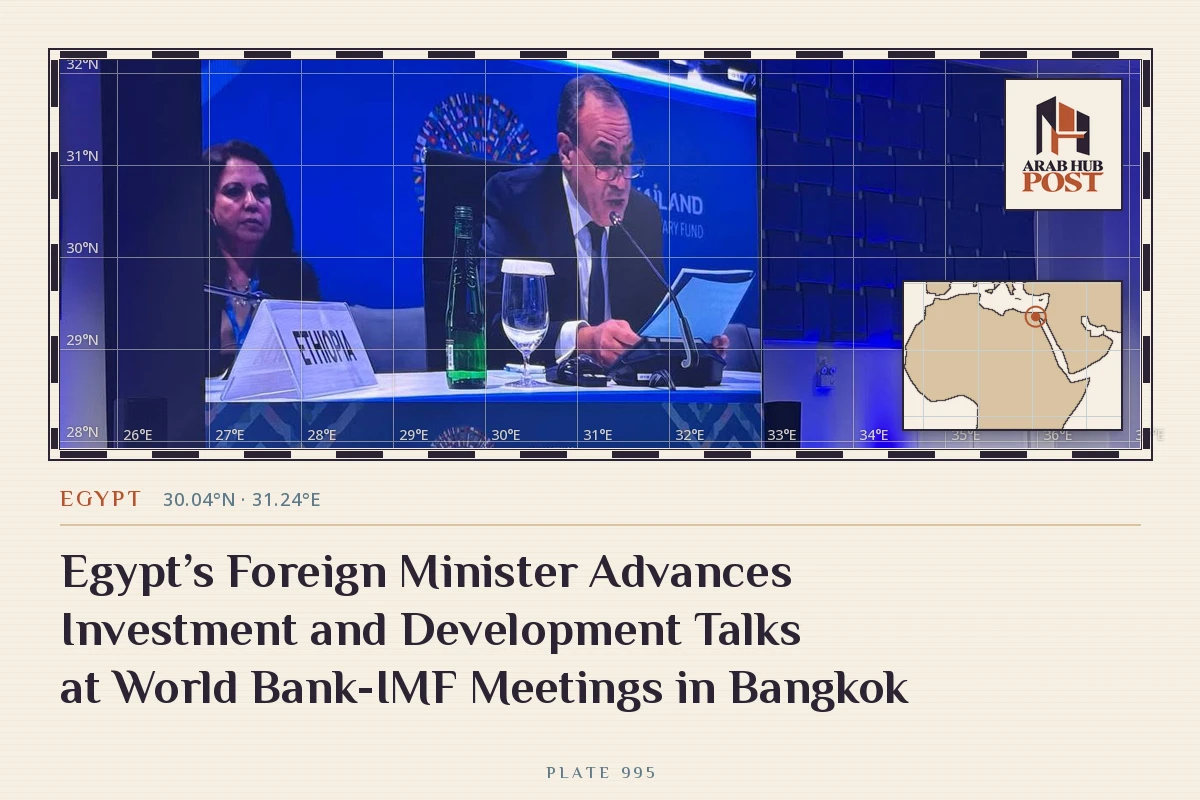
Egypt’s Foreign Minister Badr Abdelatty held a series of meetings with international and Arab financing institutions and foreign officials in Bangkok on the sidelines of the World Bank and IMF meetings, focusing on private-sector investment, development financing, job creation and regional issues. The discussions took place as global financial institutions gather to address development challenges affecting the Middle East and North Africa.
He met International Finance Corporation Managing Director Makhtar Diop together with Planning and Economic Development Minister Ahmed Rostom to talk about increasing IFC investment in Egypt and encouraging private-sector involvement in renewable energy, green hydrogen and infrastructure. He praised the IFC’s role in supporting Egypt’s state asset offering programme and urged stronger trilateral cooperation in Africa that would combine Egyptian companies’ implementation capacity with IFC financing and advisory expertise. The talks also covered support for small and medium-sized enterprises, climate finance, trade financing and risk‑sharing mechanisms.
In another meeting he spoke with the President of the Arab Bank for Economic Development in Africa, Abdullah Al‑Musaibeh, about expanding the participation of Egyptian companies in bank‑financed projects across Africa, especially in infrastructure, agriculture, value chains and private‑sector development.
Abdelatty also joined a ministerial roundtable on job creation that was attended by World Bank Group President Ajay Banga. He said development finance must generate tangible and sustainable employment and highlighted Egypt’s institutional mechanisms for monitoring projects and removing implementation obstacles, including a presidential committee that oversees national projects. He also called for broader use of guarantees to mobilise private investment alongside concessional development finance.
Later he met Tsutomu Yamamoto, Managing Director of the Multilateral Investment Guarantee Agency (MIGA), to discuss expanding the agency’s role in supporting investment and strengthening investor confidence in Egypt. Abdelatty said the government aims to boost private‑sector participation through tax and customs incentives, digitalised procedures and updated regulatory frameworks, while taking steps to secure energy and food supplies and maintain fiscal discipline amid regional and global pressures.
Regional and Bilateral Discussions
On regional and bilateral matters, Abdelatty met British Foreign Secretary Ed Miliband to discuss economic, investment and trade ties as well as escalating regional tensions and their implications for energy and food security. According to the Egyptian Foreign Ministry, the two ministers stressed the importance of de‑escalation and political and diplomatic solutions and condemned recent attacks on Saudi Arabia.
They also discussed Sudan, with Abdelatty emphasizing the need to preserve the country’s unity, territorial integrity and national institutions. The ministry said the talks included the need to halt arms flows to militia groups and to support state institutions as part of efforts toward a ceasefire.
Abdelatty also met Japan International Cooperation Agency Senior Vice President Yoko Mitsui to discuss expanded cooperation in the green transition, artificial intelligence, digital transformation and industrial localisation. The talks covered continued support for the Egypt-Japan University of Science and Technology and training Egyptian personnel in specialised engineering and technology fields.
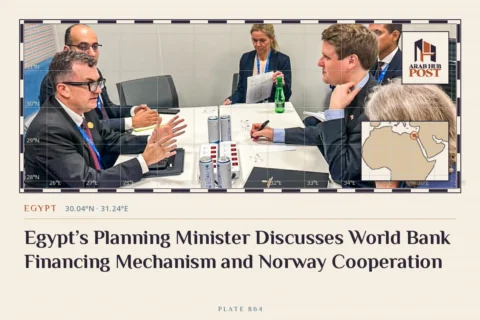
In a separate meeting with Norwegian International Development Minister Åsmund Grøver Aukrust, Abdelatty discussed increasing Norwegian investment in clean and renewable energy, green hydrogen, energy storage and green infrastructure. They also addressed Gaza, stressing humanitarian access, civilian protection and support for early recovery and reconstruction, while Abdelatty proposed broader Egypt-Norway trilateral development cooperation in Africa.
Abdelatty later met Fawzi Youssef Al‑Hanif, head of the Arab Fund for Economic and Social Development, and called for more flexible financing tools to address trade and supply‑chain disruptions, debt burdens, food and water security and climate change. The meeting covered regional projects in electricity interconnection, transport, logistics, food security and cross‑border infrastructure, as well as greater co‑financing among Arab, regional and international financial institutions.
African Economic Integration Advocacy
Abdelatty also addressed a meeting of African governors with World Bank President Ajay Banga on behalf of the African group, calling for faster implementation of the African Continental Free Trade Area and the removal of barriers facing African companies, trade and investment. He urged the World Bank to establish a systematic mechanism to monitor implementation of African economic integration commitments and to measure actual results rather than focusing only on pledges.
Reader comments
No comments on this report yet.