
UN Mission and Economic Working Group Address Libya’s Financial Pressures and Reform Agenda in Tripoli
Published Updated By Arab Hub Post Staff
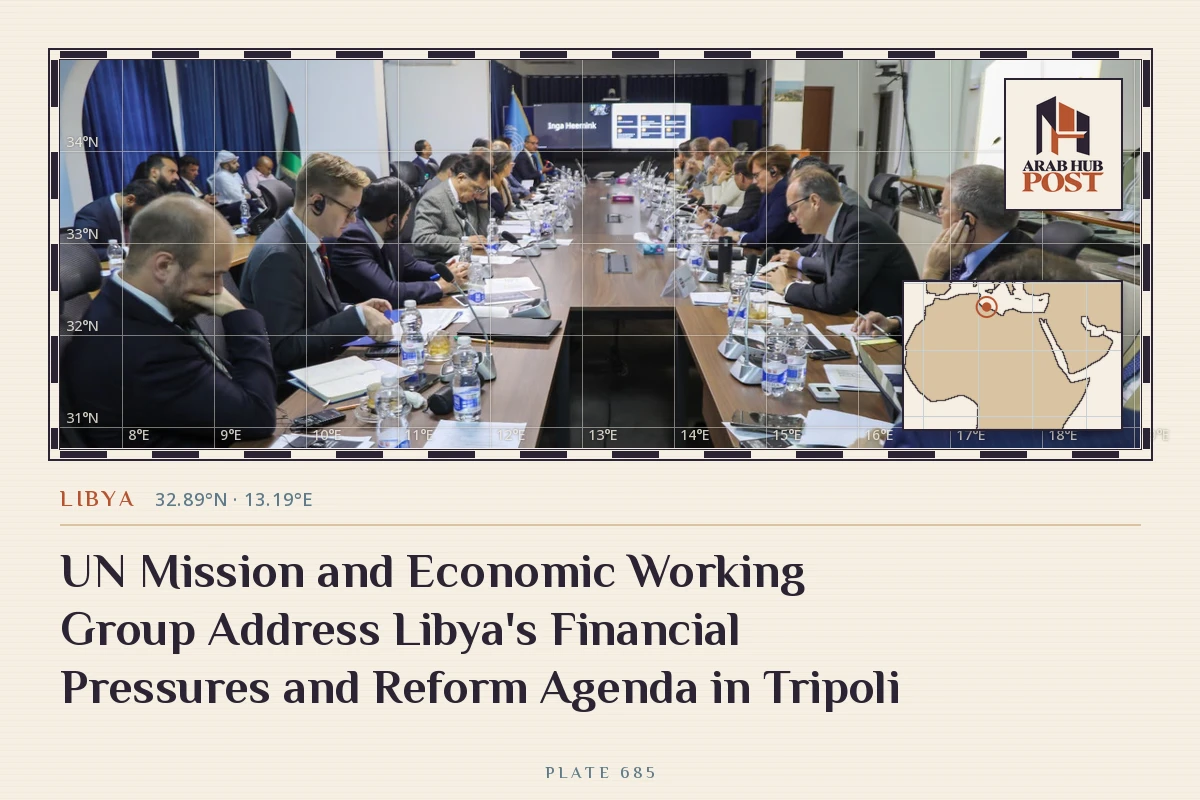
An expanded session of the Economic Working Group, a component of the Berlin Process, convened on Tuesday at the Tripoli headquarters of the United Nations Support Mission in Libya. The gathering focused on the economic and financial difficulties confronting the country and explored mechanisms to align international backing for reforms spearheaded by Libyan institutions.
Broad Participation at UNSMIL Headquarters
According to a statement posted on the mission’s official page, attendees included delegates from the working group’s co-chairs — Egypt, the United States, the European Union, and UNSMIL itself — alongside representatives of the Audit Bureau, the National Oil Corporation, numerous other states, and regional and international bodies such as the League of Arab States and the African Union.
Read also: Libya’s Energy Sector Rebounds as US Firms Stay on the Sidelines
Related video
Special Representative Outlines Growing Economic Strain
In opening remarks, Hanna Tetteh, the Special Representative of the UN Secretary-General, underscored that Libya is grappling with intensifying economic pressures even though energy prices have been favourable this year. She pointed to escalating public expenditure, the depreciation of the dinar, and the erosion of citizens’ purchasing power as key indicators of the strain.
Read also: Libya’s Central Bank Governor Naji Issa Removed in Forcible Takeover
Governance Weaknesses and Illicit Flows Cited
Tetteh warned that deficient economic governance, political meddling in sovereign economic and oversight bodies, and illicit activities — notably fuel smuggling and money laundering — are diverting billions of dollars away from the Libyan people, thereby undermining financial and economic stability. She stressed the necessity for concrete, coordinated measures to bolster institutional accountability, safeguard public resources, and guarantee that national wealth serves the interest of all Libyans, highlighting the intrinsic connection between economic governance and the country’s political trajectory.
Read also: Morocco Opposition RNI Accuses New Government of Lacking Reform Ambition
Discussions Cover Transparency, Sector Reforms, and Next Steps
The talks addressed ways to enhance transparency and oversight of public assets, protect sovereign institutions, and combat illicit financial and economic practices. Participants also reviewed ongoing reform initiatives within the oil and banking sectors and the obstacles impeding their implementation. They emphasised the urgency of accelerating reforms and deepening cooperation with national bodies, while examining priorities for the next phase aimed at underpinning financial stability, improving institutional coordination, and embedding governance rooted in transparency and accountability.
More in Libya


Reader comments
No comments on this report yet.