
Oman and Pakistan Convene Eighth Joint Ministerial Commission in Islamabad
Published By Arab Hub Post Staff
Meeting Overview
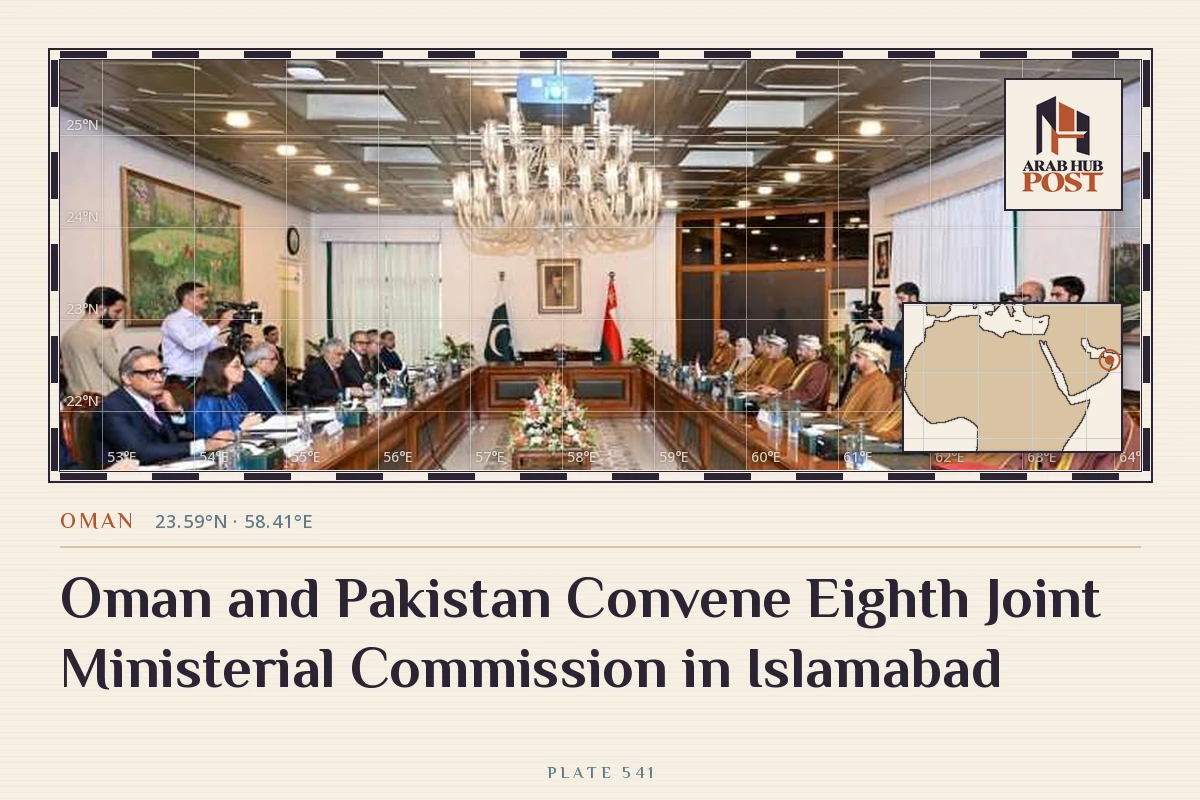
The eighth session of the Joint Ministerial Commission between the Sultanate of Oman and the Islamic Republic of Pakistan took place today in Islamabad. The Omani delegation was led by Sayyid Badr bin Hamad Al Busaidi, the country’s Foreign Minister, while the Pakistani side was headed by Mohammad Ishaq Dar, who serves as Deputy Prime Minister and Minister of Foreign Affairs.
Regional Context
Oman is situated on the southeastern coast of the Arabian Peninsula, whereas Pakistan lies in South Asia, giving the two states distinct yet complementary geographic positions.
Discussions on Bilateral Ties
During the meeting, participants reviewed the current state of Omani‑Pakistani relations and explored ways to deepen cooperation in several priority sectors that serve the shared interests of both nations and reflect the aspirations of their leaderships and peoples.
In his remarks, Sayyid Badr bin Hamad Al Busaidi stressed that the partnership rests on long‑standing historical, geographical, commercial, maritime and human links. He noted that convening the commission creates a chance to broaden areas of collaboration and turn the plentiful opportunities available in each country into concrete results.
The Omani Foreign Minister also commended Pakistan’s constructive role in fostering regional dialogue and diplomacy, singling out its efforts to facilitate communication between Iran and the United States. He added that initiatives that strengthen communication and mutual understanding are especially valuable amid ongoing regional developments.
Pakistani Perspective and Areas of Cooperation
Mohammad Ishaq Dar, speaking for Pakistan, praised the esteemed standing Oman enjoys in its neighbourhood and its balanced approach to nurturing good‑neighbourly relations and promoting regional cooperation under the leadership of His Majesty the Sultan. He urged building on the existing solid foundation of bilateral ties and maintaining institutional follow‑up on the commission’s outcomes so that agreements are turned into practical steps.
The commission’s agenda covered a wide range of fields: trade, investment, industry, agriculture, the financial sector, energy, oil and gas, logistics, ports, food security, technology, tourism, labour, consular affairs, security, defence, climate change, civil aviation, education, media and culture. It also examined how to strengthen partnerships between governmental institutions and the private sector in both countries.
Reader comments
No comments on this report yet.