
Kuwait Cabinet denounces Houthi strikes on Saudi airports, pledges solidarity
Published By Regional Desk
Condemnation of Houthi attacks
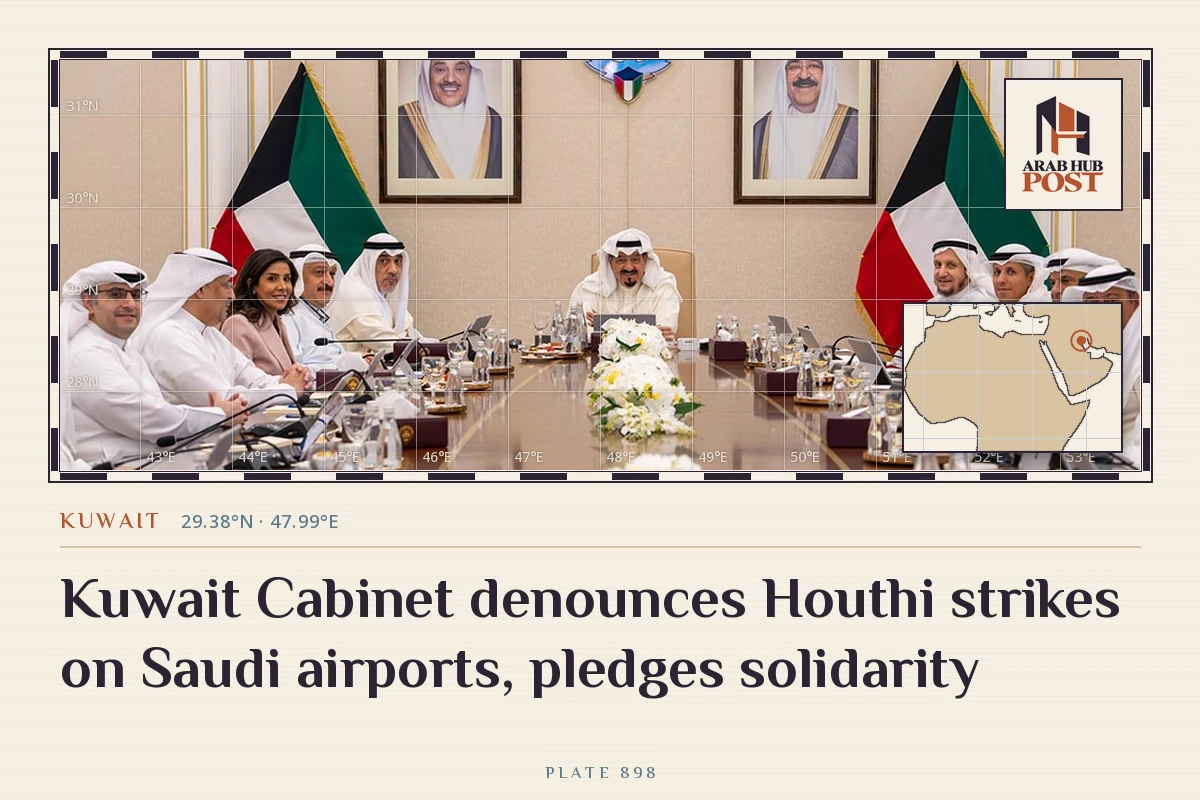
Kuwait Cabinet condemned continued Houthi attacks on Saudi Arabia that struck King Khalid International Airport in Riyadh, King Fahad Airport in Dammam and Abha Airport in recent days, causing deaths and injuries among innocent civilians and material damage.
In a statement issued after its weekly meeting chaired by Prime Minister Sheikh Ahmad Abdullah Al-Ahmad Al-Sabah, the Cabinet described the attacks as a flagrant violation of Saudi Arabia’s sovereignty and international law.
It called for a firm international stance to halt the attacks and hold those responsible accountable, reaffirming Kuwait’s full solidarity with Saudi Arabia and support for all measures the kingdom takes to protect its security, stability and sovereignty.
The Cabinet stressed that Saudi Arabia’s security is inseparable from that of Kuwait and the GCC countries, extended sincere condolences to the Saudi leadership, government and people, to the governments and peoples of the victims’ home countries and their families, and wished the injured a speedy recovery.
Diplomatic and international engagements
The Cabinet was briefed on a phone call received by Amir Sheikh Meshal Al-Ahmad Al-Jaber Al-Sabah from Iraqi President Nizar Amedi on Monday. They reviewed longstanding bilateral relations, discussed ways to strengthen cooperation, exchanged views on mutual concerns and regional and international developments, especially the current situation in the region, and stressed the need to end escalation and return to dialogue and diplomacy to resolve outstanding issues.
It also received briefings on meetings held on Monday by Crown Prince Sheikh Sabah Khaled Al-Hamad Al-Sabah, Prime Minister Sheikh Ahmad Abdullah Al-Ahmad Al-Sabah and Foreign Minister Sheikh Jarrah Jaber Al-Ahmad Al-Sabah with Arab League Secretary‑General Nabil Fahmy, who was on an official visit to Kuwait. The talks focused on advancing joint Arab action and developing the Arab League’s mechanisms to better serve Arab causes and address present challenges, alongside regional developments and shared concerns.
Further briefings covered meetings held the previous week by the same trio with Slovak Foreign and European Affairs Minister Juraj Blanar during his official visit to Kuwait.
The Cabinet reviewed the Prime Minister’s meeting last week with Italian Minister of Enterprises and Made in Italy Adolfo Urso, attended by Oil Minister Tariq Al-Roumi and Direct Investment Promotion Authority Director General Sheikh Dr. Meshal Jaber Al-Ahmad Al-Sabah. Discussions covered economic, investment and industrial cooperation, support for the business sector and promotion of innovation. During the meeting, Urso expressed appreciation to Kuwait, represented by Kuwait Petroleum International (Q8), for answering Italy’s appeal to cap fuel prices, adding that the action reflected concern for the economic conditions faced by Italian families.
The Cabinet also received a briefing on the Prime Minister’s meeting with Mary Yamashita, who serves as the UN Secretary‑General’s High‑Level Representative tasked with implementing Security Council Resolution 2792 (2025) on the issue of missing Kuwaitis and third‑country nationals and the restitution of Kuwaiti assets, including the national archives.
The Cabinet was briefed by Foreign Minister Sheikh Jarrah Jaber Al-Ahmad Al-Sabah on the ministry’s political and diplomatic activities and the work of Kuwait’s overseas missions to stay updated on recent regional and international developments.
In that regard, the Cabinet learned that the foreign minister had received a phone call on Sunday from Yemeni Foreign Minister Afrah Abdulaziz Al-Zouba, who also holds the portfolio of Expatriate Affairs, during which he reaffirmed Kuwait’s support for Yemen’s legitimate government, its sovereignty, independence and territorial integrity.
Domestic agenda
The Cabinet examined various agenda points, such as reports and minutes from ministerial committees, endorsing some and sending others back to the pertinent committees for additional study and recommendations before finalising the required procedures.
The details were supplied by KUNA.
Reader comments
No comments on this report yet.