
Omani actor Al Balushi reflects on theatre, identity and digital change
Published Updated By Regional Desk
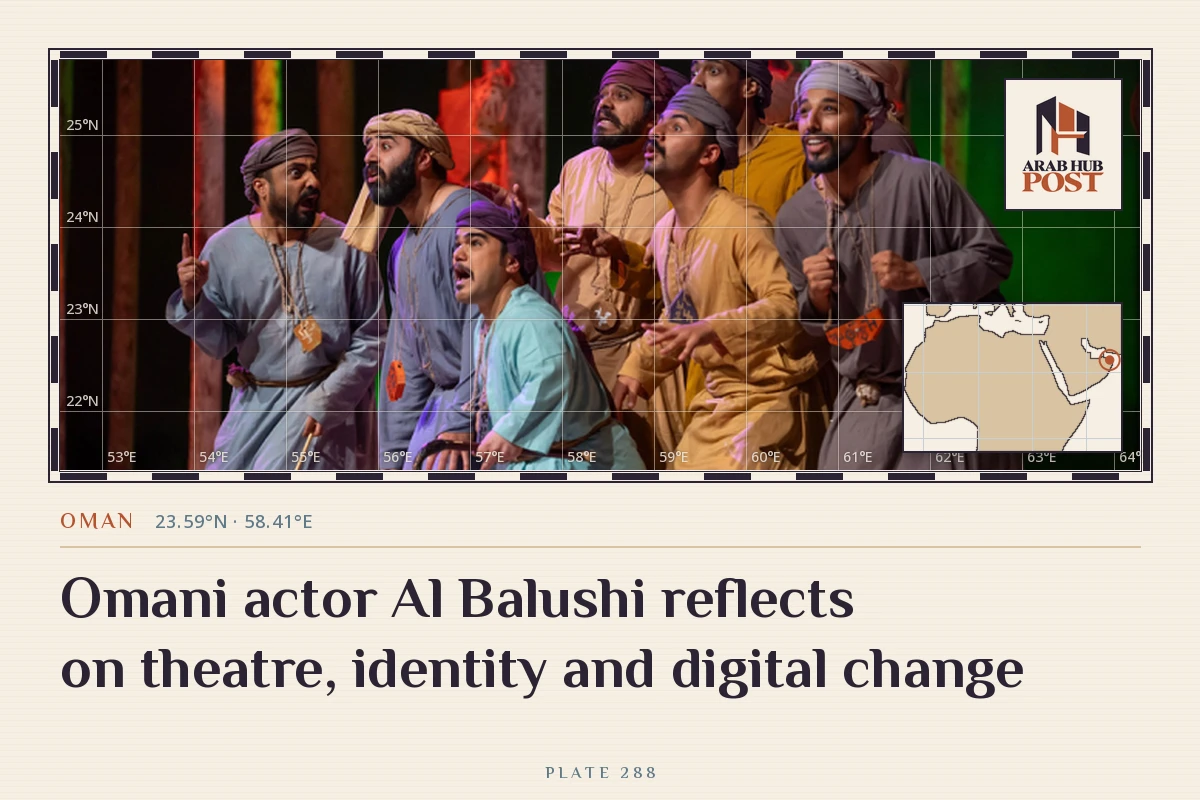
Oman’s theatre artist Omair Anwar Al Balushi has shared his perspective on the craft of acting, the role of theatre in society, and the challenges posed by digital transformation, speaking in an interview with the Oman News Agency.
Acting as a path to deeper understanding
Al Balushi described how embodying characters has reshaped his view of human behaviour. He said every role forces him to reconsider judgements he once considered final about people. In daily life, individuals are often reduced to single labels such as weak, selfish or cruel, but performance demands a search for what a character fears, what they have lost, and how they reached a given moment. This practice has made him slower to judge and more attentive to what people conceal behind their actions, he explained, adding that such understanding does not excuse all conduct but allows him to see the human being in all contradictions. Acting, he noted, grants a different vision that influences one’s outlook on life, and with each role he discovers something about himself — sometimes a familiar fear, sometimes a courage he wishes he possessed. He enters a role seeking another person and emerges knowing a part of himself, a process that has raised his social awareness and deepened his grasp of cultural and behavioural differences.
Read also: Oman's archives authority launches inclusive heritage exhibition for deaf and blind students
Theatre as a space for questioning, not answering
On the function of theatre, Al Balushi said impactful work begins when it gives the spectator an elusive sensation in body and voice. A person may carry pressure, fear or a sense of injustice for years, then witness a scene and recognise it as the expression they could not articulate. He stressed that speaking for an audience requires listening to it; an artist cannot claim to know people’s needs better than they do while remaining distant from the details of their lives. Theatre, he added, does not distribute answers but creates situations that make the audience reconsider its own responses — to empathise with a character, then be surprised by that character’s conduct, and ask why the empathy arose and what they would have done in the same place. Awareness, he suggested, can begin in the moment a spectator hesitates before judging, and theatre can provide that moment.
Freedom, responsibility and cultural identity
Al Balushi affirmed his belief in artistic freedom, linking it to the responsibility an artist bears for his choices. Before presenting a sensitive scene, he asks why it is needed, what it will reveal, and whether he understands the experiences he is addressing. An actor’s freedom, he said, begins with respect for society, which includes engaging seriously with its questions and pains and allowing space to discuss what is difficult to say. The audience, in turn, has the right to discuss and disagree with the work, just as the artist has the right to clarify his vision. He also emphasised the distinction between a character’s position and his own, noting he may embody someone whose ideas he rejects because exposing those ideas and their consequences is part of drama’s function. When he can explain the necessity of such a choice artistically and humanly, he feels closer to the freedom he values.
Read also: Oman Launches Second Phase of Digital Economy Programme with RO 1.5 Billion GDP Target
Regarding Omani identity on stage, Al Balushi said presenting it starts with knowing the Omani person — their relationship to land and family, their modes of joy and sorrow, what they say and what they withhold. Costume, music and dialect matter, but their presence must carry meaning within the work. When he uses folk art, he asks what it adds to the scene, whether it reveals a relationship, moves an event, or carries the character’s memory. These questions help him move beyond ornament to drama. Oman’s diversity of environments, voices and experiences, he said, grants the artist a wide palette, and it is his responsibility to approach that diversity with knowledge and respect. He aspires to work in which the Omani spectator recognises himself and through which a viewer from beyond local borders comes to know Omani society, making particularity a gateway to communication.
Recognition and the risk of repetition
Al Balushi recently received the Best Actor award at the competition of the Literary and Artistic Forum held in the Wilayat of Sohar in North Al Batinah Governorate. He said the honour delighted him, but he remains aware that behind the actor on stage lies the effort of an entire team — people who gave the performance their time, trust and toil. The award provides a welcome impetus and signals that something of his effort has landed, he noted, adding that it also represents appreciation of a specific experience within its context. He rejoices in it and tries to understand what succeeded and what needs development. His ambition, however, exceeds what he has reached. He fears an artist may become attached to the rewarded image and repeat it in search of new appreciation. He hopes the award grants him the courage to venture, and that the most beautiful thing to follow will be a role that asks him to begin learning anew.
Read also: Ancient faience workshop in Sudan reveals how Kushite rulers controlled craft production
Stage versus screen: extension and density
On the difference between theatre and television drama, Al Balushi explained that on stage he carries the character’s entire journey in his body, follows its development, lives its rhythm, and exchanges energy with fellow actors and the audience in the same moment — even silence is shaped by the breathing of the hall. Before the camera, the distance changes; a small eye movement may become an entire event, and any excess effort shows clearly. Filming may also require performing the end of an experience before its beginning, demanding precise knowledge of the character’s psychological position in every scene. The depth of human experience can be great in both mediums, he said; his challenge lies in controlling the manner of its arrival — how to make the last spectator in the theatre feel him, and how to let the camera come close without explaining everything. He summed up the two experiences in a phrase: theatre teaches him the extension of the moment, and the camera teaches him its density.
Digital transformation and the future of live encounter
Looking ahead, Al Balushi said digital transformations invite a rethinking of the value of the live encounter. Today’s spectator can access entire worlds from a phone, so the question becomes what experience justifies leaving home. Theatre possesses the particularity of an encounter between human beings who share time and place — a laugh travelling between seats, a silence everyone feels, a moment taking shape before them with all its possibilities. From this comes the responsibility to present accomplished works close to people’s questions and experiences. In his field, he said, these questions are present in his thinking and planning; he considers how to keep pace with developments, harness digital tools for theatrical creativity, widen audience access, and build a continuous relationship that begins before the audience enters the hall and extends after the performance ends. Achieving this, he stated, requires continuity in presenting performances, clear schedules, effective communication, and a comfortable attendance experience. Digital platforms can open the door of curiosity, bring the audience closer to the work and its makers, and ease access and participation. He aspires for the audience to know when to find them and to find in every visit something that invites a return; the future of theatre, he concluded, is shaped by the ability to build and renew that trust, performance after performance.
More in Oman




Reader comments
No comments on this report yet.