
Bahrain’s Shura Council calls for continuous legal updates to protect economy amid global shifts
Published By Regional Desk
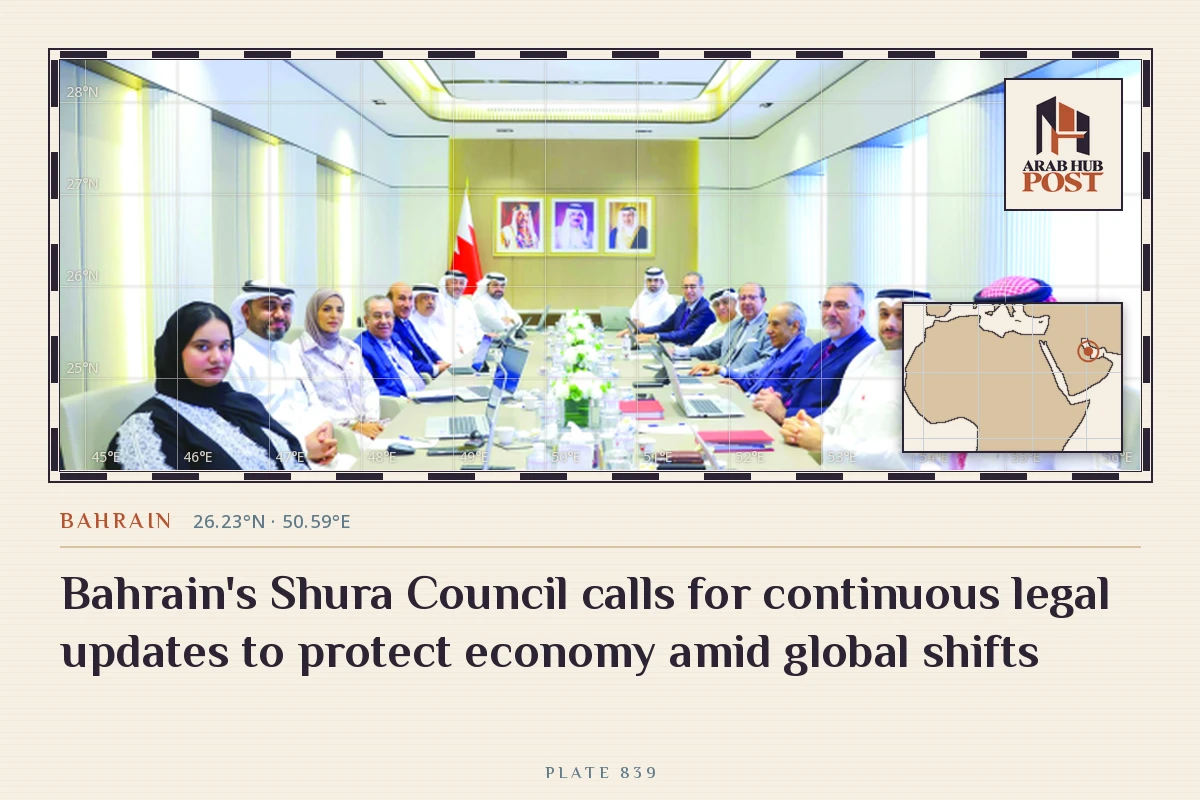
Bahrain must persistently revise its financial and economic legislation to cope with growing geopolitical tensions, evolving global trade patterns and swift technological advancements, according to Khalid Al Maskati, chairman of the Shura Council’s financial affairs committee.
The rapid pace of international economic developments made legislative reform essential for protecting national economic stability, boosting competitiveness and keeping development plans on schedule, Al Maskati added.
“Building a resilient and sustainable economy requires continuously updating our legislation and financial policies to respond to changing regional and international circumstances,” he said.
Al Maskati spoke after the committee held its first meeting of the term, during which members emphasised the importance of diversifying Bahrain’s income sources, improving resource management, securing supply chains and creating an attractive investment environment. He said these priorities were central to safeguarding public finances and supporting Bahrain Economic Vision 2030.
The committee also examined the economic consequences of global trade developments, maritime security and emerging technologies, particularly artificial intelligence. It called for laws that keep pace with modern business needs while encouraging innovation and investment.
The committee reviewed outstanding matters and reports prepared during the previous parliamentary session before examining several key financial documents related to the 2024 fiscal year.
Parliamentary committees set priorities
Separately, MP Ahmed Al Salloom has been re-elected chairman of Parliament’s financial and economic affairs committee for the third consecutive term, with MP Mohammed Al Marafi elected vice-chairman.
Al Salloom said the committee’s priorities include the proposed corporate tax law, the next state budget and two borrowing bills to finance road expansions, bridges and other infrastructure projects. He expects the corporate tax bill, which targets companies with net profits exceeding BD200,000, to reach Parliament for debate before the end of November, provided agreement is reached on outstanding issues.
He disclosed that the multinational corporate tax had generated more than BD150 million for the state budget, according to final accounts.
MP calls for debate on localisation
MP Hamad Al Doy has called for a Parliament debate on replacing foreign workers with Bahrainis in the private sector. He said major private companies and government-owned firms were failing to take localisation seriously, while foreign workers’ contracts continued to be renewed.
Al Doy stressed that the session should focus exclusively on localisation, with tangible measures to improve job opportunities for Bahraini youth.
Reader comments
No comments on this report yet.