
Kuwait National Library Marks White Cane Day with Focus on Visually Impaired Rights
Published By Arab Hub Post Staff
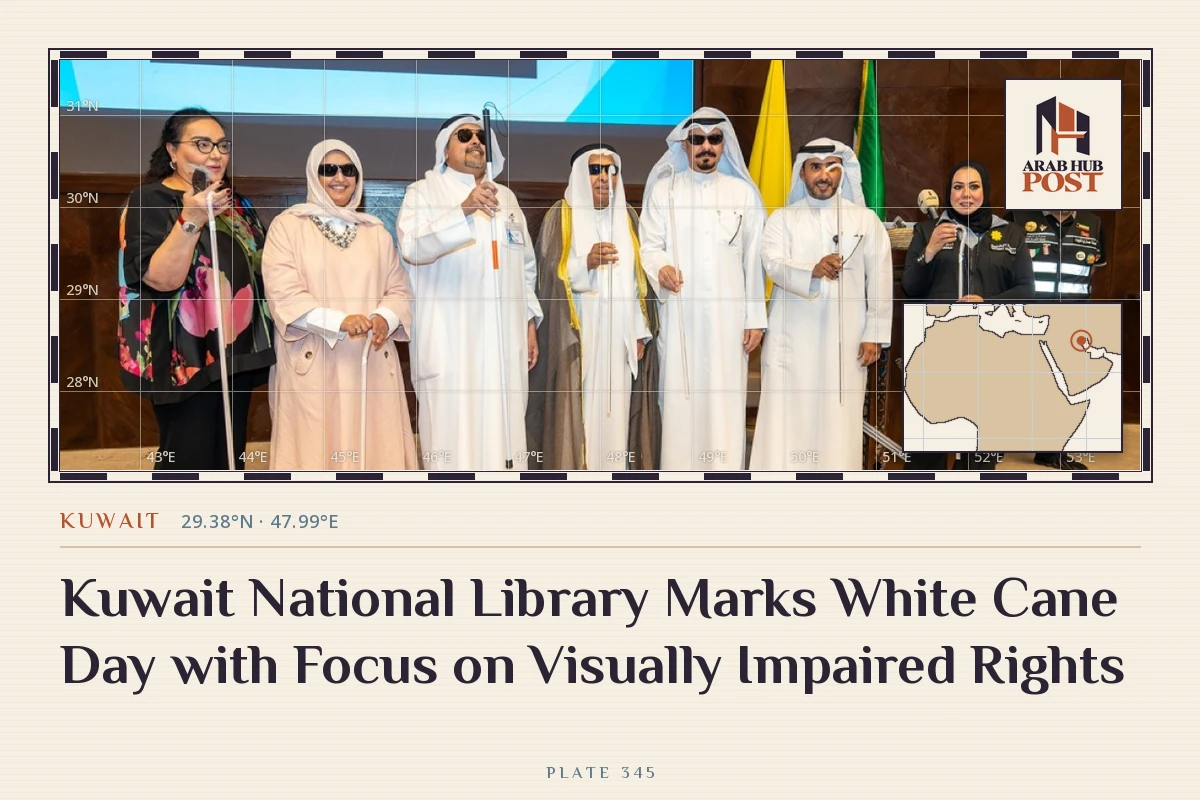
Event Overview
Kuwait’s National Library held an event called ‘Visual Impairment: Between Social Rights and Developmental Visions’ on a Wednesday to increase public awareness of the rights of visually impaired persons and encourage their inclusion in society. The gathering, organized together with several disability‑support groups, coincided with International White Cane Day, which is marked each year on 15 October.
Official Remarks
Nassar Bu Labqa, who heads the Information Services and Digital Library Department at the library, informed KUNA that highlighting the rights of disabled people is vital for their full participation in all areas of life. He added that awareness‑raising events and activities foster social inclusion and equal opportunities, and that the library’s initiative demonstrates its social responsibility and dedication to meeting the needs of persons with disabilities.
Bu Labqa explained that the library runs special programmes and activities designed to build an inclusive culture and offer a supportive setting for disabled people to engage in cultural and educational pursuits. He reiterated the institution’s pledge to broaden cooperation with government agencies, civil‑society organisations and volunteer groups that work with disabled communities. Such collaboration, he said, would help align efforts, launch community projects and enhance the contribution of cultural bodies to serving all sections of society and advancing Kuwait’s overall development objectives.
Abdulrahman Al‑Adwani, a visually impaired media adviser who served as the event’s general coordinator, said the occasion—now in its fourth year—spotlighted the civil, social and legal rights of visually impaired individuals, their hopes for the future and their part in achieving sustainable development. Speaking to KUNA, he stressed that empowering visually impaired persons to live independently and take part fully in society as partners in development and nation‑building is crucial.
He thanked the National Library for its cooperation and for hosting the international observance, describing White Cane Day as a chance to reassert the right of visually impaired people to safe movement, freedom of travel and independence. He noted that the white cane is an internationally recognised symbol of visual impairment and a key aid that lets users move through their surroundings with greater confidence and safety.
Community Impact and Outreach
Al‑Adwani also called for the adaptation of public facilities and the provision of accessible infrastructure to promote inclusion. He pointed out that the library’s tactile pathways enable visually impaired visitors to navigate its premises more independently and safely. He added that visually impaired people wish to contribute actively to the goals of the New Kuwait 2035 vision by having more chances to display their abilities, talents and creativity, and to share their knowledge and ideas across various development sectors.
He estimated that the visually impaired population in Kuwait numbers between 7,000 and 8,000, underscoring the necessity of programmes and initiatives that meet their needs and broaden their opportunities for social, professional and developmental engagement. He mentioned that an accompanying exhibition brought together more than 25 bodies from government institutions, NGOs, the private sector, civil‑society groups and volunteer teams. The display presented services and initiatives that support people with visual impairments while encouraging cooperation and coordination among the participants.
Al‑Adwani expressed gratitude to all participating organisations and individuals for their support of the event, saying that joint efforts by institutions and the wider community are essential to strengthening respect for the rights of visually impaired persons, eliminating barriers to participation and empowering them to help build a more inclusive and equitable future.
International White Cane Day seeks to raise awareness of the rights of visually impaired people and to highlight the white cane’s role in promoting independence and safe mobility. It also aims to foster social inclusion, remove obstacles and expand opportunities for visually impaired individuals to take part in every aspect of life. — KUNA



Reader comments
No comments on this report yet.