
Morocco Launches Inquiry into Eye Injection Complications at Tangier Hospital
Published By Regional Desk
Investigation Launched
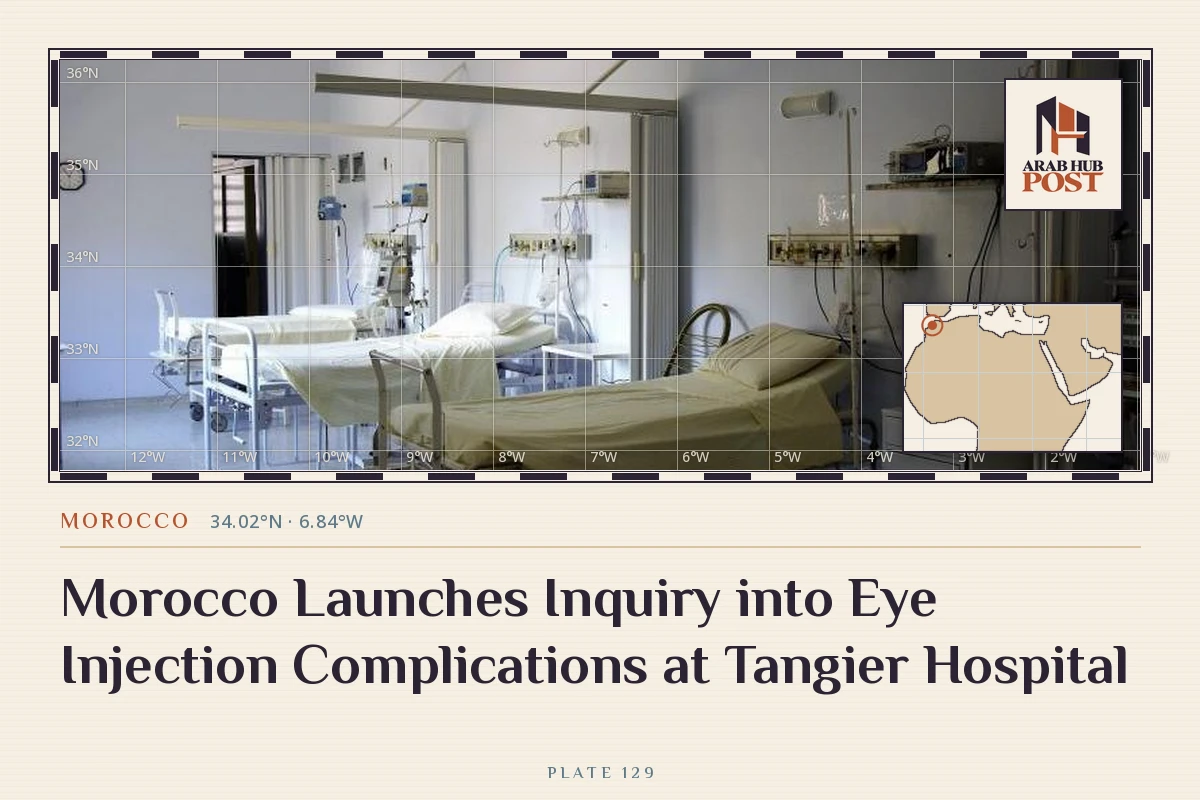
Morocco’s Ministry of Health and Social Protection has formed a special committee to investigate reports that 15 diabetic patients suffered severe vision damage after receiving eye injections at Mohammed VI University Hospital in Tangier, according to Hespress AR sources. Tangier, a major port city in northern Morocco, hosts one of the kingdom’s key university hospitals.
They had been receiving the injections as part of routine ophthalmology follow‑up care.
The inquiry began after two patients developed acute inflammation following treatment on October 8, leading hospital staff to reach out to the remaining 16 individuals who had undergone the same procedure. Subsequent examinations revealed comparable symptoms in the majority of the 18 patients, prompting concerns about the underlying cause of the complications, the sources noted.
Patient Impact and Response
According to the sources, most of the affected patients are older adults living with diabetes who already experienced impaired vision and weakened retinas as a result of complications from the chronic disease.
A hospital official, speaking on condition of anonymity, said medical records showed that all affected patients had a visual acuity of around 2/10, making the consequences of the acute inflammation particularly severe. Some patients consequently experienced what they described as complete vision loss.
The official said specialized medical teams are monitoring and treating all reported cases at the university hospital, and added that the final outcome for patients is expected to become clearer in approximately three months.
Inquiry into Drug Safety
Officials from the hospital’s infection‑control unit and the National Blood Agency visited the site and took blood samples from those affected for lab analysis. The testing seeks to identify the source of the inflammation, which has reportedly left some patients with near‑total vision loss.
Concerns have also arisen regarding the possible expiry of the injection medication. The hospital official rejected those concerns, noting that the drug remained within its validity period, which extends to September 30, 2028.
The official said investigators are looking into whether the inflammation stems from a chemical alteration in the drug’s makeup or from an alternative source of infection.
According to the source, some of the affected individuals had received the same injection multiple times, with a few having undergone the procedure as many as five times.
The probe continues, and the exact cause of the complications remains undetermined.




Reader comments
No comments on this report yet.