Morocco’s UN envoy says autonomy plan is essential for Sahara talks, cites resolution as pivotal
Published By Regional Desk
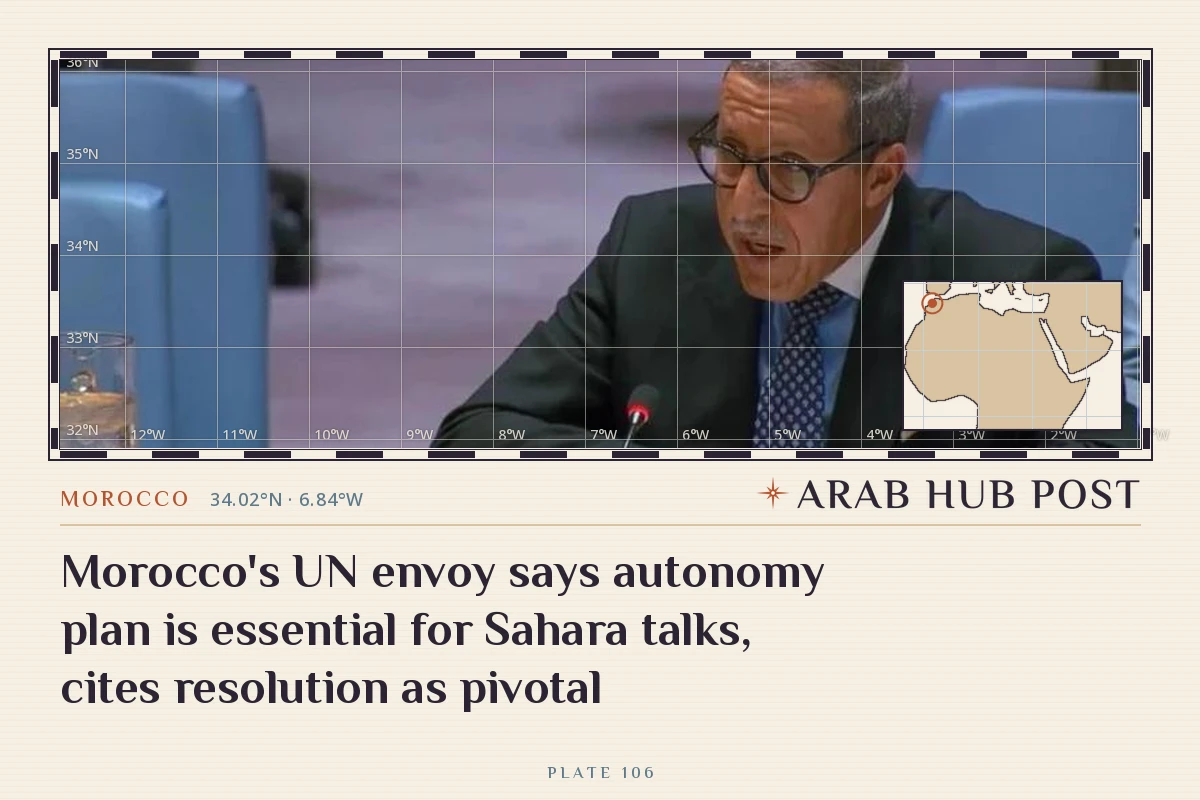
Morocco’s ambassador to the United Nations, Omar Hilale, told the Fourth Committee of the UN General Assembly that the kingdom’s autonomy initiative should serve as the foundation for negotiations over the Western Sahara, describing Security Council Resolution 2797 as a major turning point in global efforts to settle the long-running conflict.
Speaking during the ninth meeting of the Fourth Committee at the 81st session of the General Assembly in 2026, Hilale argued that the resolution, adopted a year earlier, had moved the process away from merely managing the crisis and toward seeking a political resolution. He called it an irreversible shift compared with earlier Security Council decisions, noting that it placed Morocco’s autonomy proposal at the core of the political process and urged Morocco, Algeria, Mauritania and the Polisario Front to hold good-faith negotiations without preconditions.
Autonomy plan outlined in detail
According to Hilale, Resolution 2797 cleared the way for direct talks among the four parties during three rounds of meetings held in Washington and Madrid. He added that Morocco had submitted a detailed autonomy framework specifying the powers of executive, legislative and judicial institutions. The proposal, he said, attempts to blend political pragmatism, democratic governance and the aspirations of the local population.
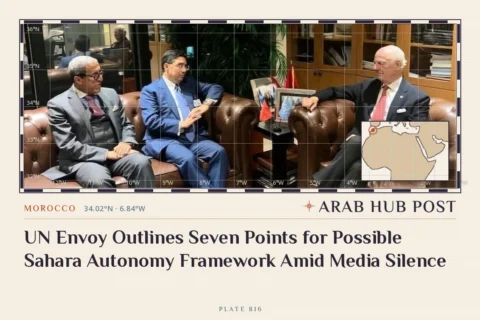
Citing the latest report from the UN secretary-general, Hilale said the discussions allowed the parties to examine concrete parameters for a potential future settlement. He urged all sides to implement Security Council resolutions, negotiate without preconditions, show good faith through practical steps, honour their commitments, and restore and respect the ceasefire.
“Only under these conditions can the momentum created by Resolution 2797 be sustained and translated into progress toward a successful conclusion,” he told the committee.
Humanitarian situation and confidence-building
Hilale also highlighted the humanitarian dimension of Resolution 2797, pointing to the plight of people living in camps near Tindouf in Algeria. He argued that the international community could not indefinitely manage what he described as the world’s second-longest refugee crisis without a durable political solution. Morocco, he said, demanded that the population of the Tindouf camps benefit from lasting solutions under international law and the principles of the UN refugee agency, including dignified and voluntary return.
The ambassador criticised statements that he said contained historical inaccuracies, legal distortions and denials of what Morocco regards as the implications of Resolution 2797. He maintained that the integration of the Sahara into Morocco had been reinforced by the Green March and the 1975 Madrid Accords, which were deposited with the United Nations, and argued that the latest resolution strengthened that integration through an autonomy arrangement under Moroccan sovereignty.
Hilale quoted a speech by King Mohammed VI on 31 October 2025, in which the monarch described the period as a decisive turning point in Morocco’s modern history and called for a unified Morocco extending “from Tangier to Lagouira.”
Interpretation of self-determination challenged
Concerning the principle of self-determination, Hilale argued that its interpretation under international law should not be confined to UN General Assembly Resolution 1514. He cited Resolutions 1541 and 2625, saying they must be read alongside the principle of territorial integrity and the right of peoples to freely determine their political status. He presented Resolution 2797 as supporting negotiations on autonomy under Moroccan sovereignty.
Hilale described good faith as a practical obligation rather than a diplomatic slogan, asserting that Morocco had shown its commitment by submitting a detailed autonomy proposal in Washington. He called on the other parties to demonstrate a comparable willingness to engage. He also stressed that Morocco, Algeria, Mauritania and the Polisario Front had all participated in the Washington and Madrid discussions as the four parties identified by the Security Council, not as observers or third parties.
Turning to the International Court of Justice’s 1975 advisory opinion on the Sahara, Hilale emphasised the court’s finding that legal ties of allegiance existed between Morocco’s sultan and some tribes in the territory before Spanish colonisation. He argued that these historical ties supported Morocco’s position. However, the court’s opinion also concluded that the evidence did not establish territorial sovereignty over the Sahara for Morocco or the Mauritanian entity, and that the legal ties did not affect the application of the principle of self-determination through the free and genuine expression of the territory’s population.
Hilale rejected the description of the Sahara as Africa’s “last colony,” arguing that the discussions in Washington and Madrid concerned an autonomy arrangement under Moroccan sovereignty, not a referendum on the territory’s status.
Representation and referendum dismissed
The Moroccan envoy also challenged the Polisario Front’s claim to represent the population living in the Tindouf camps, asserting that political representation should come from free and transparent elections. He said elected representatives from the Sahara, including those chosen in Morocco’s legislative elections on 23 September 2025, should be recognised as legitimate representatives of the region’s population.
Hilale criticised renewed calls for a referendum, arguing that they overlooked the direction taken by Security Council decisions over the past 25 years. He noted that, according to his reading, recent resolutions adopted by the Fourth Committee had not referred to a referendum.
He expressed optimism that Resolution 2797 and the Washington and Madrid discussions could lead to a final settlement of the half-century-old dispute, while also opening the door to a new era of regional cooperation, an ambition he linked to King Mohammed VI’s October 2025 speech.
At the conclusion of his address, Hilale reiterated Morocco’s support for the United Arab Emirates’ claim to sovereignty over Greater Tunb, Lesser Tunb and Abu Musa, islands administered by Iran and claimed by the UAE. He called for support for Abu Dhabi’s efforts to resolve the dispute through direct negotiations or referral to the International Court of Justice.