UN Envoy Outlines Seven Points for Possible Sahara Autonomy Framework Amid Media Silence
Published By Arab Hub Post Staff
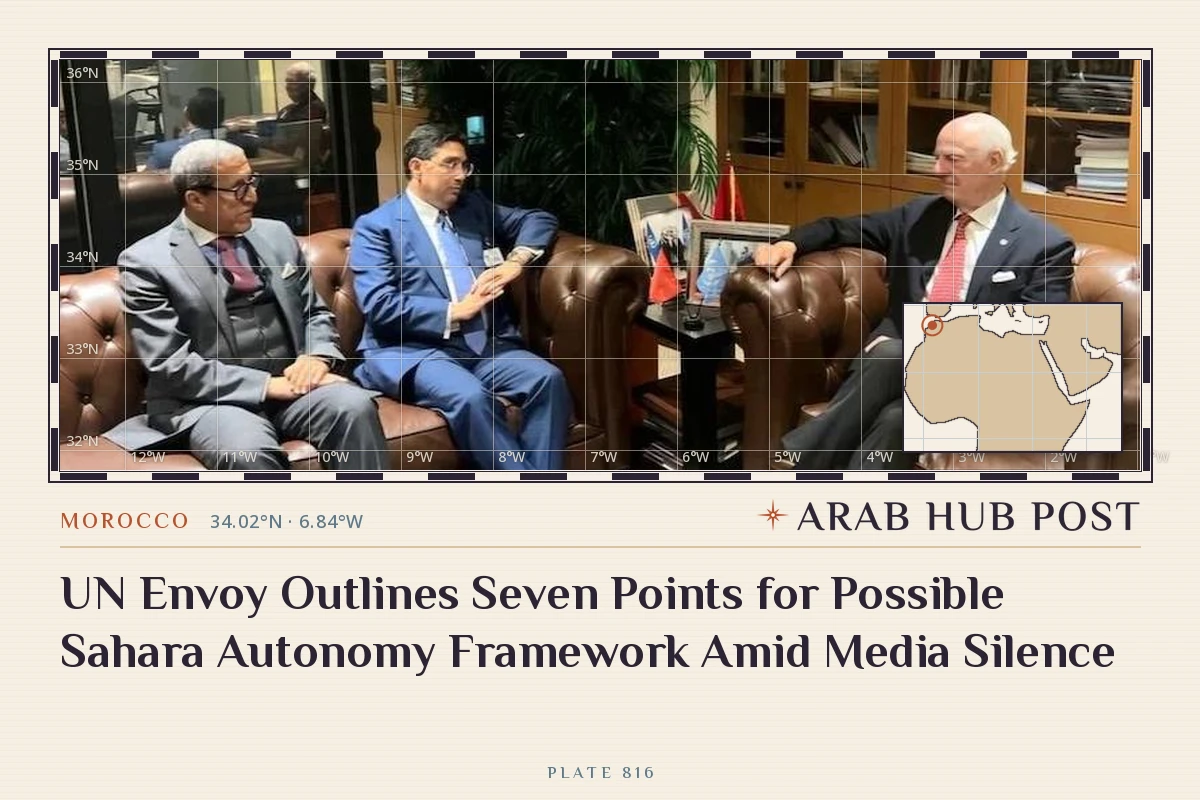
Envoy’s media stance
Morocco remains at the centre of the United Nations‑led discussions on the future of Western Sahara, as the UN envoy for the Sahara declined to speak with Hespress about recent developments. The dispute over the territory continues to influence diplomatic and security dynamics across North Africa.
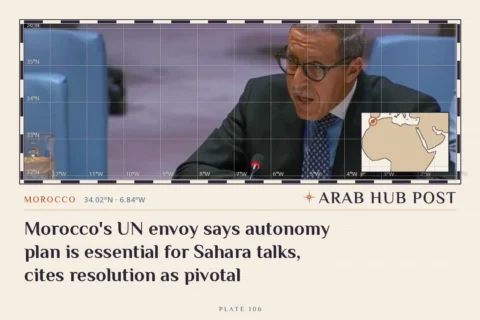
Staffan de Mistura, the secretary‑general’s personal envoy for the Sahara, told Hespress through a written reply that he would not grant media interviews, on or off the record, while the Security Council deliberations are ongoing. Christopher Thornton, an adviser to the envoy, conveyed that de Mistura recognised the media’s role in delivering accurate information and said his office would contact Hespress when the envoy decides to resume engagement.
Seven areas under review
Separate UN sources informed Hespress that a closed‑door briefing de Mistura gave to the Security Council on 8 October examined elements that could shape an autonomy framework as a basis for a political settlement. According to those sources, the elements comprise seven areas: constitutional guarantees for the continuity of an autonomy arrangement; the division of powers between local authorities and the central state; arrangements for political participation in local institutions; mechanisms for obtaining the population’s consent to a final‑status agreement; local management of regional budgets and the distribution of natural‑resource revenues; protection of local cultural and linguistic identity, notably Hassani culture; and international guarantees to oversee implementation of any potential agreement and ensure long‑term compliance.
Together these points cover constitutional, institutional, economic and cultural aspects, plus safeguards for putting a possible agreement into practice. The sources stressed that presenting these areas does not mean they have been adopted as agreed conditions by the parties; a final settlement would still depend on negotiations and the parties’ willingness to take part in the UN‑led process.
Obstacles to progress
During the same briefing, de Mistura and Alexander Ivanko, the secretary‑general’s special representative and head of MINURSO, also discussed developments on the ground and the outlook for the political process. A UN source previously told Hespress that de Mistura had submitted documents containing recommendations and conclusions from his latest contacts with the parties, aiming to prepare the ground for renewed political engagement and advance a mutually acceptable settlement.
The briefing took place as the Security Council prepared to review the future of MINURSO, whose mandate is set to lapse on 31 October. De Mistura identified two principal obstacles to advancement: reports of gunfire and violations of the 1991 ceasefire agreement, and enduring mistrust among the parties that continues to hinder political understanding. He emphasised that short‑term confidence‑building measures, alongside efforts to address on‑the‑ground issues, are necessary to create conditions conducive to negotiations, requiring political engagement to be paired with steps that reduce tension and improve the chances of reaching an agreement.
The source added that the UN secretary‑general’s report issued in early October highlighted the need to sustain political efforts and avoid actions that could undermine them. De Mistura continued to coordinate with the US administration to overcome existing obstacles and move the political process forward while the Security Council readied itself to discuss MINURSO’s mandate and the latest UN report.
Negotiation framework disagreement
The elements outlined in the briefing emerge amid a continuing disagreement over the framework for future talks, especially concerning Morocco’s autonomy proposal. Morocco asserts that its plan for autonomy under Moroccan sovereignty should serve as the foundation for a political settlement. The Polisario Front, meanwhile, rejects adopting that proposal as the basis for future discussions, according to its most recent statement.
The dispute extends beyond the institutional details of a possible autonomy arrangement to the broader political framework within which negotiations would occur. Consequently, defining the powers of local institutions and the safeguards attached to any agreement remains tied to the negotiating process and the parties’ willingness to work out practical details.
Ongoing Security Council consultations carry added weight as members assess the political process and the future of MINURSO. With de Mistura seeking to push forward debate on possible settlement formulas and the Polisario Front challenging the proposed negotiating framework, attention is turning to the UN’s next steps and its ability to keep the parties engaged in the pursuit of a final settlement.