
Qatar Customs and Qatar Chamber launch e-ATA Carnet training for officials
Published By Regional Desk
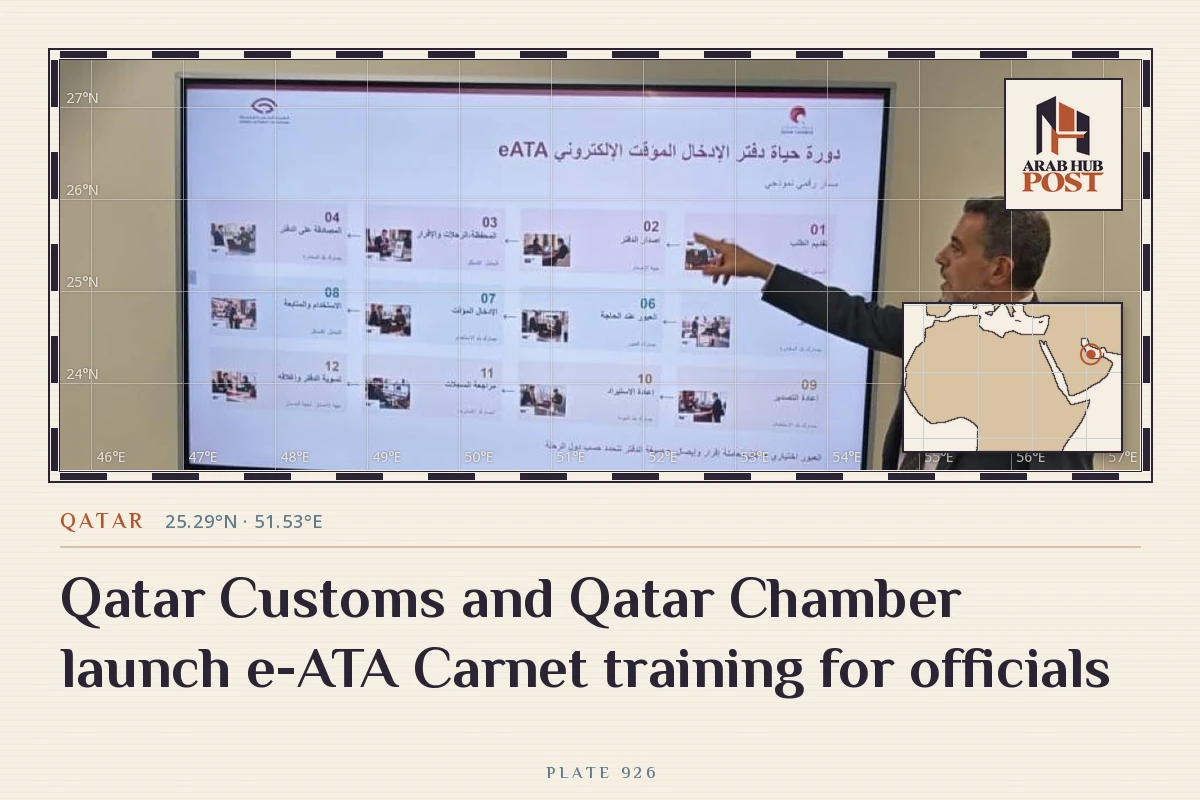
The General Authority of Customs (GAC) and Qatar Chamber (QC) have jointly conducted a training programme focused on the Electronic ATA Carnet (e-ATA Carnet), attended by over 35 customs officials. The initiative is part of broader efforts to accelerate digital transformation and simplify customs procedures in Qatar.
Cooperation to modernise customs services
HE Sheikha Tamader Al-Thani, Director of the International Relations and Chamber Affairs Department at Qatar Chamber, said in statements that the programme demonstrates the strong ongoing cooperation between Qatar Chamber and the GAC in modernising customs services and enhancing cross-border efficiency. She praised the active engagement of GAC officials, highlighting their shared commitment to developing professional skills and adopting modern electronic systems in line with Qatar’s digital transformation objectives.
e-ATA Carnet as a milestone for business
Her Excellency explained that the ATA Carnet is a vital tool for facilitating the temporary admission of goods, including exhibition items, professional equipment, and commercial samples, without requiring standard customs duties or taxes. She emphasised that the transition to the e-ATA Carnet represents a major milestone for the business community, as it reduces reliance on paper documents, speeds up transaction processing, and improves data accuracy and transparency. She added that the training went beyond technical mechanisms to harmonise procedures and strengthen coordination among relevant bodies, ultimately enhancing service delivery for businesses, importers, and exporters.
Topics covered in the training
The programme covered several key topics related to the e-ATA Carnet system, including its core concepts, the issuance and usage of electronic carnets, temporary admission and re-export procedures, the respective roles of customs authorities and chambers of commerce, and the tracking of carnets along with the completion of related transactions. It also included practical cases, allowing participants to develop a thorough understanding of the various stages involved in processing an e-ATA Carnet, from initial issuance to final customs clearance and re-export.
Reader comments
No comments on this report yet.