Egypt Tests Centralised Lending System as Short-Selling Framework Nears Launch
Published By Regional Desk
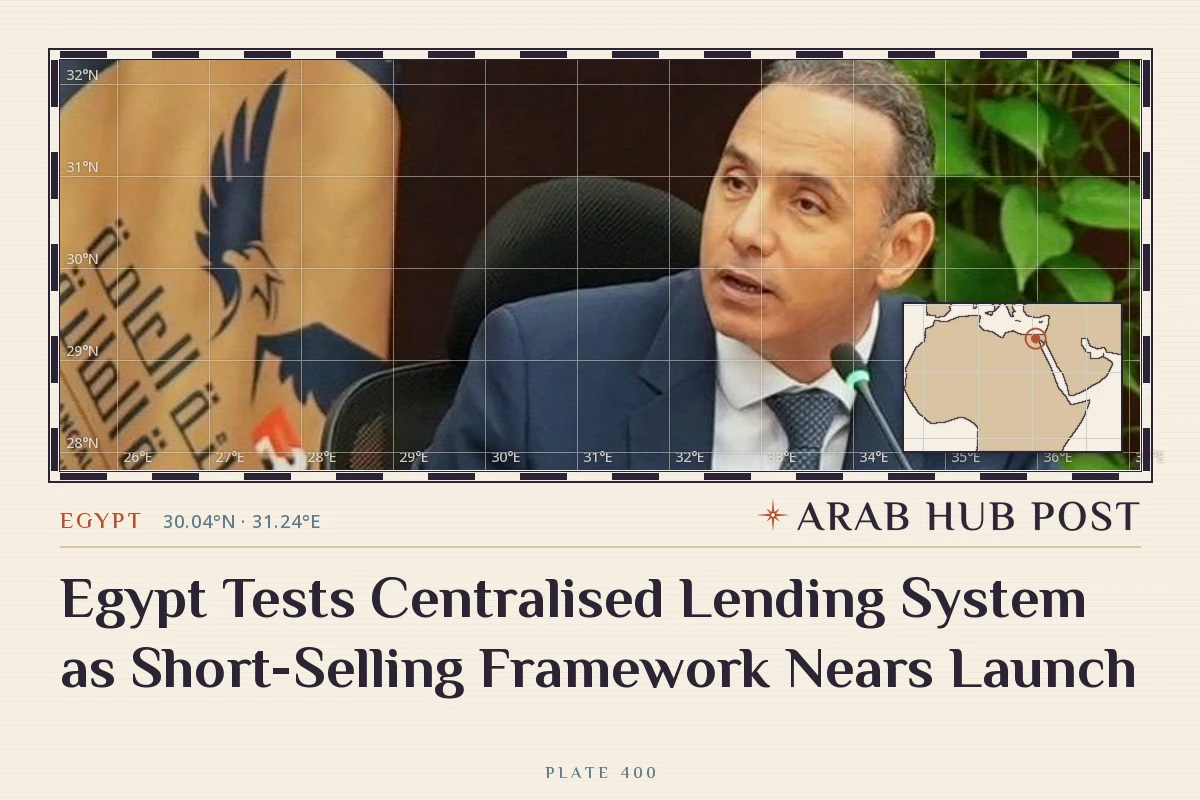
Egypt’s Financial Regulatory Authority (FRA), in collaboration with the Misr for Central Clearing, Depository and Registry (MCDR) and the Egyptian Exchange (EGX), has begun live technical trials of a centralised securities lending system. The tests come ahead of the planned introduction of short-selling under a new regulatory framework established by FRA Board Decision No. 155 of 2026.
System Features and Technical Trials
Technical teams from the three institutions have examined the latest upgrades to the operational infrastructure and electronic systems required to ensure seamless, real-time connectivity between MCDR and brokerage firms. All operational stages and procedures have been documented.
The system will allow borrowing clients—short sellers—to view all available lending offers from lenders and select those that match their investment objectives. Lenders, in turn, will be able to see other lending offers registered on the platform.
Several brokerage firms licensed to conduct short-selling operations took part in the latest technical trials. The tests are designed to confirm that the mechanism operates smoothly and efficiently from its launch, and to verify that participating firms have established the necessary technological infrastructure, connected to the centralised lending system, and enabled real-time transaction updates for clients.
Regulatory Framework and Governance
Islam Azzam, chairperson of the FRA, stated that the centralised lending system, developed and operated by MCDR, will maintain records of securities available for lending under the new rules. The framework aims to ensure transparency, robust governance, and the protection of all parties’ rights, in line with international best practices and under the FRA’s full supervision.
Azzam added that the ongoing live technical trials build on the constructive dialogue the FRA has held with market participants ahead of the launch. This reflects the importance of balancing regulatory requirements with international experience.
The chairperson explained that the live tests are intended to enhance transparency and enable both borrowers and lenders to monitor transactions in real time. The system will also ensure that all operational stages and procedures are documented, particularly the verification and registration of securities available for lending. Records will include the names and quantities of securities offered, lending periods, transaction and client details, and the closure of open positions. These measures are designed to safeguard the rights of all parties involved.
Roles and Responsibilities of Market Participants
The parties involved in short-selling include the lender—an investor willing to make securities they own available for lending; the borrower—an investor who borrows securities to sell them and later return them according to the applicable arrangements; the licensed brokerage firm facilitating the transaction; the custodian, which receives requests to make securities available for lending; and MCDR, which operates the centralised lending system and serves as the central securities depository and registry.
The lending client remains entitled to the financial benefits and other rights attached to the lent securities throughout the lending period, including cash and in-kind dividends, subscription rights, and other entitlements. Voting rights at the company’s general assembly, however, remain with the owner of record on the relevant date for the meeting.
Lending Limits and Risk Management
The regulatory framework also establishes limits on securities lending and borrowing. The aggregate amount of shares lent may not exceed 40 percent of a listed company’s total free-float shares, while the amount borrowed by an individual client and their related parties may not exceed 2 percent of the company’s total free float. Direct contracts between a brokerage firm, lender, and borrower are subject to a separate cap of 5 percent of the total free float, with the brokerage firm retaining responsibility for such contracts.
MCDR is required to monitor lending and borrowing limits and ratios to ensure that the prescribed thresholds are not exceeded. It must also revalue borrowed securities and total collateral at the end of each business day using the latest closing price of each security. Any resulting valuation difference must be settled daily through the brokerage firm’s settlement account, in accordance with the applicable procedures.
If a brokerage firm fails to return the borrowed securities, MCDR must take the necessary steps to recover and return them to the lending client. MCDR is also required to retain the full proceeds from the sale of borrowed securities and invest them for the benefit of the lender, starting from the settlement date of the sale, in fixed-income instruments or other investment vehicles approved by the FRA. The lending fee and investment return due to the lender must be paid within two business days of the closure of the centralised position.
Brokerage firms and custodians must provide the FRA and EGX with any data, information, and documents requested in connection with these transactions. The FRA, in turn, has the authority to take prompt measures to preserve market stability and prevent harm to the market and its participants. Such measures may include revoking a brokerage firm’s authorisation to conduct short-selling operations.