Egypt supports financing for 36 projects in southern Nile Basin states, says minister
Published By Regional Desk
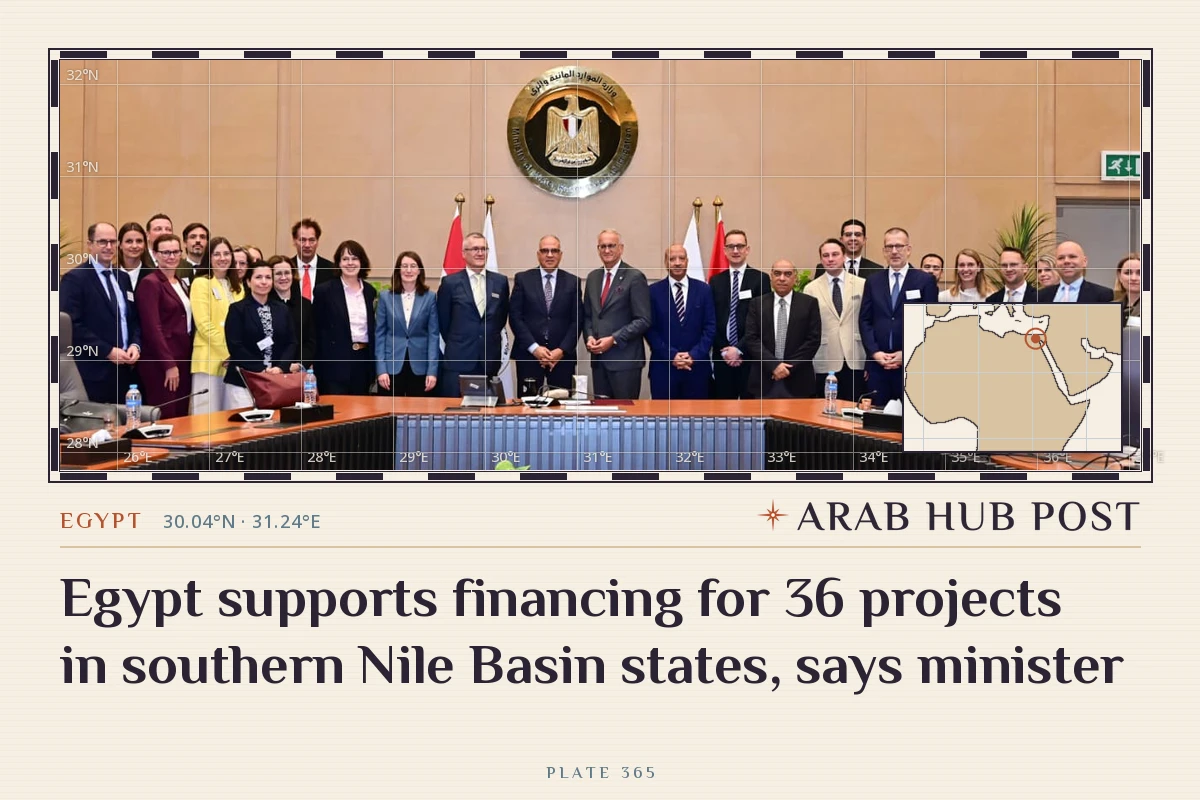
Egyptian Minister of Water Resources and Irrigation Hani Sewilam announced that Egypt is supporting efforts to secure financing for a set of 36 projects in southern Nile Basin countries. The projects span hydropower, electricity interconnections, transmission lines, water supply, and multipurpose infrastructure.
Sewilam made the statement during a meeting in Berlin with Wolf-Jürgen, head of Germany’s Federal Academy for Security Policy, and an accompanying delegation. The discussions covered Egyptian-German cooperation in water resources and support for water and climate adaptation projects in Africa.
Nile Basin Initiative Investment Programme
The 36 projects are part of the Nile Basin Initiative’s investment programme, Sewilam explained. The programme is designed to identify priority projects and improve their technical, environmental, and social readiness before financing and implementation.
Sewilam also highlighted a newly launched Egyptian financing mechanism, initially funded with $100 million, to study and implement development projects in Nile Basin countries based on their priorities. These include infrastructure and dam projects in the southern basin states.
Egypt’s Existing Contributions
Egypt has already implemented more than $120 million worth of cooperation projects in Nile Basin countries and elsewhere in Africa, Sewilam said. The projects include drilling approximately 365 wells, installing solar-powered groundwater stations, constructing rainwater-harvesting reservoirs and river ports, and establishing rainfall and flood forecasting centres and water-quality laboratories.
Egyptian programmes have also covered flood protection, aquatic weed control, and training for around 1,650 participants from Nile Basin and other African countries, according to the ministry.
Cooperation with Germany and Water Management Vision
During the meeting, Sewilam and the German delegation discussed opportunities to expand cooperation in water research and practical applications, as well as the water-energy-food-ecosystems nexus and support for the Pan African Centre for Water and Climate Adaptation.
The minister outlined Egypt’s “Water System 2.0” approach, which focuses on maximising the return from each unit of water, expanding the use of digital technologies, improving water-system operations and governance, and making greater use of research and innovation.
The talks also addressed Egypt’s role as chair of the African Water Facility and ongoing cooperation with Germany’s Federal Ministry for Economic Cooperation and Development to help African countries prepare water and climate projects that are ready for financing.
Sewilam said international river management should be based on cooperation, consultation and mutual benefit among riparian states, while adhering to international law.