Remittances from Egyptians abroad rise 27.2% to $33.9bn in first eight months of 2026
Published By Arab Hub Post Staff
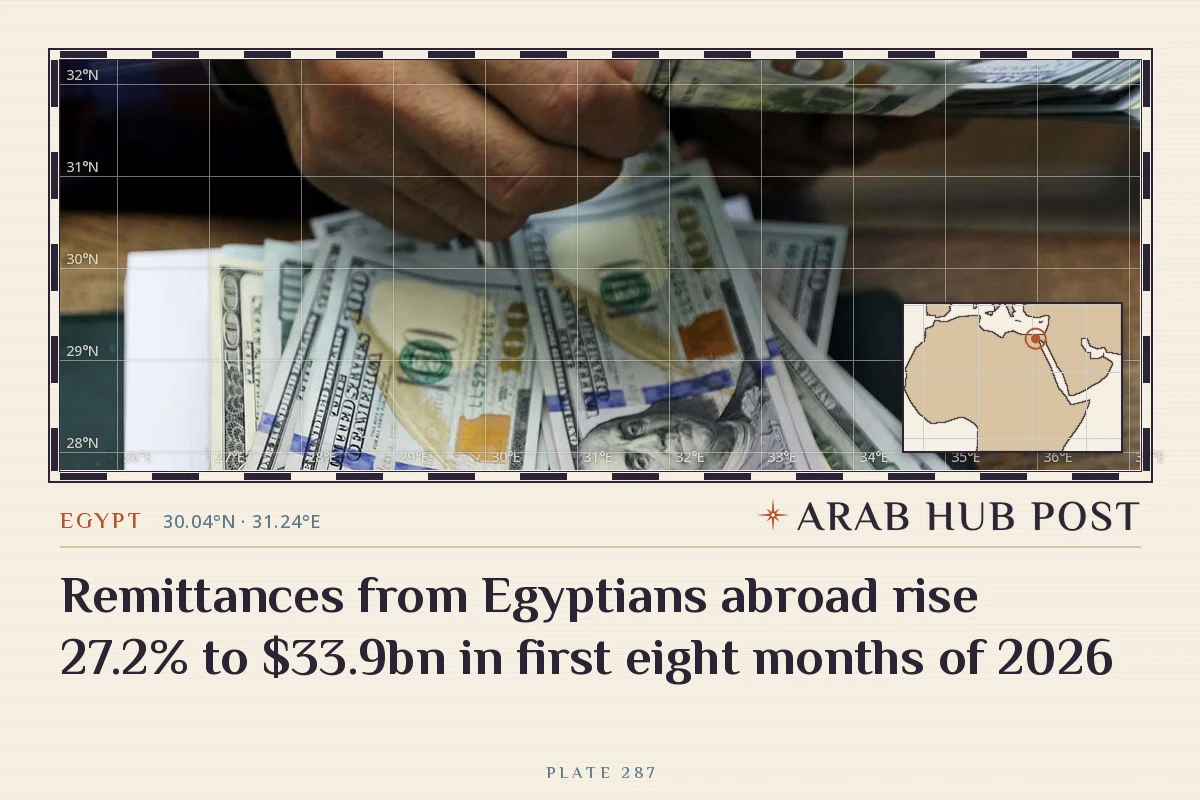
In the first eight months of 2026, Egyptians working overseas transferred approximately $33.9bn back home, marking a 27.2% increase from $26.6bn in the same period of 2025, the Central Bank of Egypt (CBE) announced.
Monthly figures also show strong growth
For August 2026 alone, remittances reached about $4.2bn, a 21.7% rise compared with $3.5bn in August 2025, the central bank added.
Expert highlights significance for economy
Shaimaa Wagih, a banking expert, said remittances from Egyptian workers abroad had evolved into a major component of the economy rather than merely a source of foreign currency or a support for the balance of payments. Their ability to boost foreign currency liquidity, strengthen banking sector resources, expand the savings base and create greater room for investment and economic activity made them influential, she stated.
Wagih underscored that these inflows were particularly important because they were sustained and linked to the earnings of millions of Egyptians abroad, unlike short-term investment flows that could be heavily swayed by global market movements. The economic value of these remittances depended not only on the amounts transferred but on how effectively they were channelled into the economic cycle and converted from monetary resources into savings, financing, investment and production, she stressed.
Banking sector positioned to benefit
According to Wagih, the rise in remittances sent through official banking channels reinforces the role of banks as the main entry point for receiving and managing these funds. This, she said, highlights the importance of banks to the real economy. The larger the share of remittances flowing through formal banking channels, the better banks would be able to manage foreign currency liquidity, offer advanced financial services to Egyptians abroad and their families, and connect these inflows to a wider range of savings and financing products.
Wagih emphasised that the advantages extended beyond increasing banks’ resources to deepening banking relationships with a broad customer base. This would turn remittances from simple money transfers into comprehensive banking ties involving savings, investment, financing, payments and digital services. She noted that one key opportunity for the banking sector lay in moving beyond treating each remittance as a standalone transaction towards building an integrated ecosystem of services centred on Egyptian customers living abroad.