
BP to Support Iraq’s Kirkuk Oilfields Output Target of 450,000 Barrels Daily
Published By Regional Desk
Transfer of Kirkuk Operations to Joint Operating Body
According to IraqiNews.com, Iraq’s Ministry of Oil announced on Thursday that operations for four major oilfields in the northern province of Kirkuk have been transferred to a joint operating body. This step aims to consolidate efforts to develop oil and gas assets and improve the efficiency of the country’s resources.
Iraqi Minister of Oil Basim Khudair oversaw the transfer of management of the Kirkuk oilfields from the North Oil Company and the North Gas Company to the joint operating entity. He said the move is part of the government’s strategy to enhance national resources and optimise the performance of production sectors.
Khudair highlighted that the transition of operations to the joint operating entity represents a significant milestone in the initiative to develop the four Kirkuk oilfields.
The plan aims to reach an oil production level of 450,000 barrels per day, in addition to 500 million standard cubic feet of gas per day, according to Khudair.
The four oilfields—Kirkuk, Bai Hassan, Jambur, and Khabbaz—are key oil assets in northern Iraq and form an important part of the government’s plans to increase production.
BP’s Participation and Investment
These developments are bolstered by British Petroleum’s (BP) participation in a project to develop the four oilfields in Iraq, aligning with broader efforts to widen the base of foreign partners.
The development plan intends to achieve a significant increase in oil and gas output in the coming years.
In 2025, BP entered into an agreement with Iraq’s North Oil Company to develop oil fields in the northern Iraqi province of Kirkuk, with projected investments totalling $25 billion.
The plan for the Kirkuk fields involves training local Iraqi staff, transferring know‑how and technology, and launching community programmes such as constructing service facilities for residents.
Khudair affirmed that BP is a strategic partner in the oil and gas sectors. He noted that working together as a team will support the project’s implementation and help address any obstacles that may arise during the development phases.
Production Targets and Regional Context
The development plan supports Baghdad’s aim to increase the country’s oil production capacity to 10 million barrels per day over the coming years.
Iraq remains one of the largest oil producers in the Arab world, with its output influencing regional energy markets.
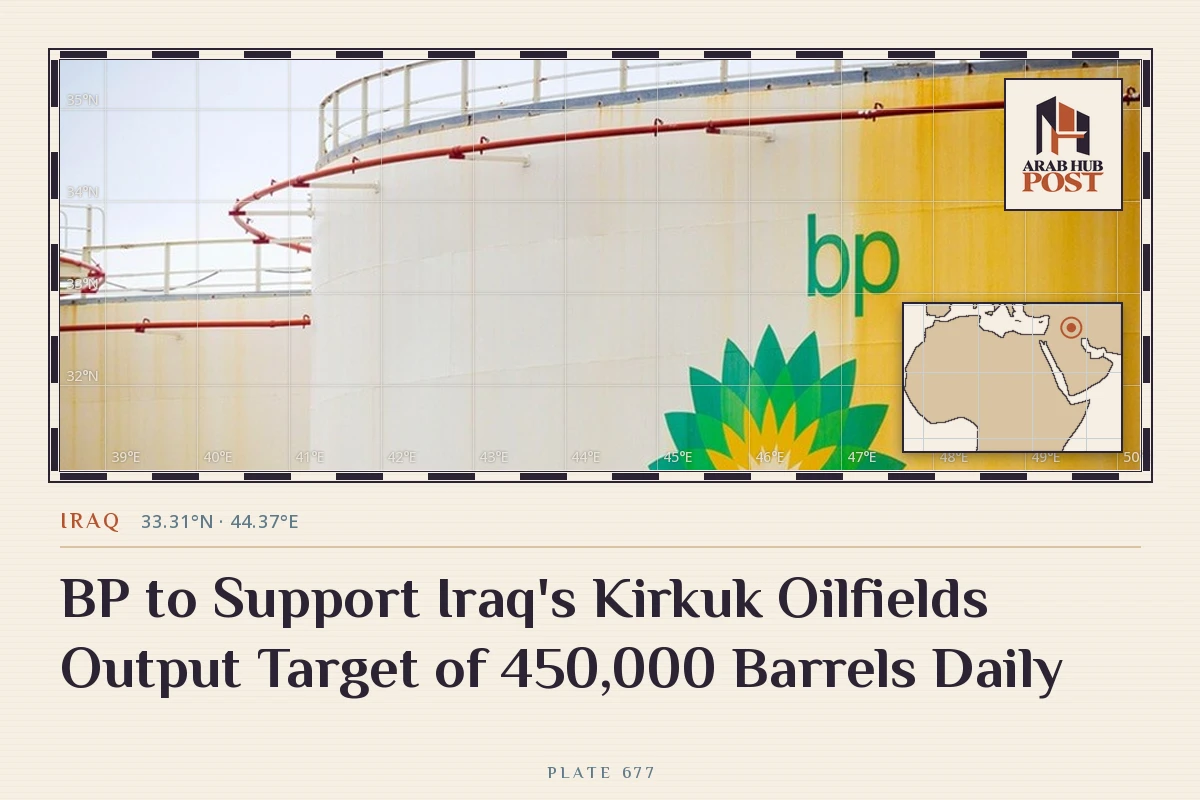
The accompanying image shows BP fuel storage tanks, credited to Islandstock/Alamy.

Reader comments
No comments on this report yet.