
Qafsa ruins in Ajloun: ancient remains reveal layers of rural life
Published By Arab Hub Post Staff
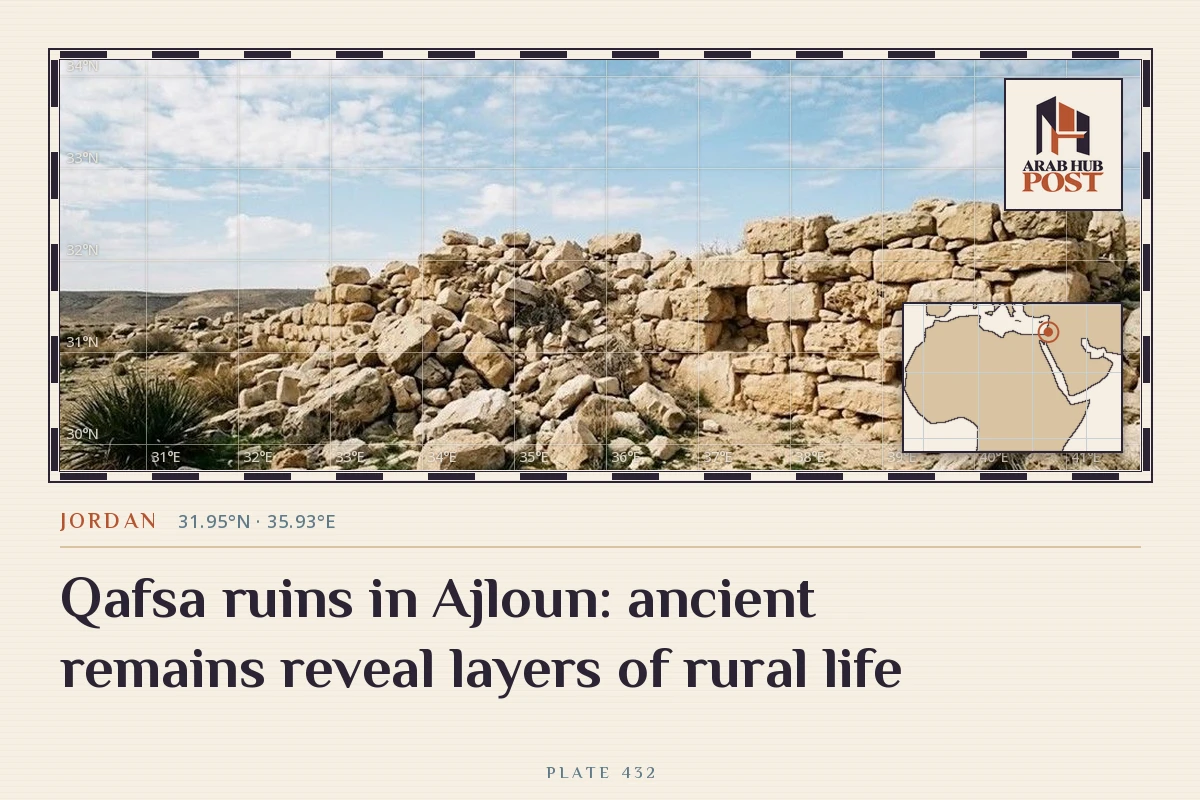
Archaeological remains at the Qafsa site, situated within the Al-Wahadneh area of Ajloun Governorate in Jordan, preserve evidence of human activity spanning multiple historical periods. The ruins of ancient structures, places of worship, wells and an olive press offer clues about how the local population lived and farmed before the settlement gradually declined.
Officials highlight rural heritage
Samer Frihat, director of culture in Ajloun, described Qafsa as one of the historical sites linked to rural life in the governorate. He noted that the surviving features provide insight into past settlement patterns, agricultural practices and the ways inhabitants exploited natural resources.
Frihat added that documenting the history of old villages and ruins requires careful attention to historical records and oral traditions, especially those concerning the residents’ daily lives, customs and ways of living, which together form part of Ajloun Governorate’s cultural and social heritage.
Basma Al-Amoush, head of the Shafa Municipal Committee, stated that Qafsa is an ancient site within Al-Wahadneh lands. Its name remains familiar to locals as the designation of one of the area’s agricultural basins. She observed that such place names have persisted even as old settlements underwent changes.
Al-Amoush explained that the people of Al-Wahadneh have maintained their connection to Qafsa’s land through farming. She added that the history of the ruins is part of the broader history of the Shafa area and the villages whose inhabitants have depended on the land and agriculture across different periods.
Researcher details settlement history
Heritage researcher Dr Mahmoud Al-Shuraideh, a native of Al-Wahadneh, said Qafsa is one of the old villages that experienced population settlement and agricultural activity during various historical eras. He pointed out that the remains of buildings, places of worship, the olive press and rock-cut wells are among the most prominent surviving features associated with the site’s past.
Al-Shuraideh added that historical sources mention Qafsa as a village inhabited in ancient times, with residents relying on grain and olive cultivation and livestock raising, taking advantage of the fertile lands surrounding the ruins.
Documenting the landscape
Photographer Mohammad Al-Za’arir said that documenting old sites through photography involves more than capturing buildings and archaeological remains; it also includes recording the surrounding landscape and valleys. He noted that combining images of landmarks with broader views of the area helps illustrate the relationship between ancient settlements and the agricultural environment on which residents depended.
Preserving collective memory
Yousef Al-Samadi, founder of the “A Place’s Story” initiative, said that documenting old villages and ruins relies on gathering historical information and listening to accounts passed down by local residents. He stressed the importance of distinguishing between information found in historical sources and stories about places and their inhabitants preserved in collective memory.
Al-Samadi added that the initiative documents local heritage through photography, video and media storytelling, focusing on the history of old sites, place names and the lives of their former residents. Its aim is to present this material in an accessible way that connects historical information with the stories of the local community.
(Petra)


Reader comments
No comments on this report yet.