
Kuwait adopts emergency measures to safeguard food imports amid Strait of Hormuz risks
Published By Arab Hub Post Staff
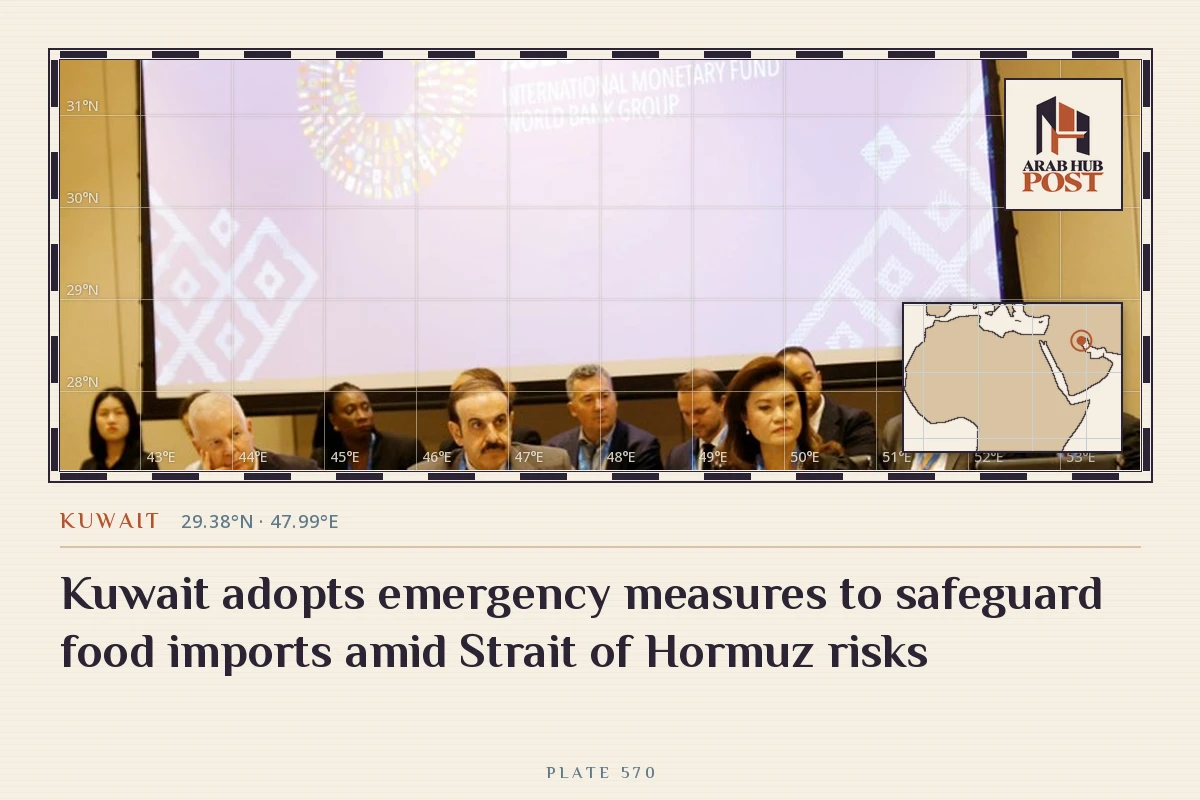
Kuwait has adopted urgent measures to ensure the continuity of supply chains, reinforce strategic food reserves and mitigate the effects of maritime disruptions on essential imports, according to Finance Minister Dr Yaqoub Al-Rifai. He made the remarks while Kuwait participated in the annual meetings of the World Bank Group and the International Monetary Fund in Bangkok.
Strait of Hormuz concerns
Speaking during a high-level ministerial session on food security, strategic maritime routes and crisis solutions, organised by the World Bank Group in partnership with the United Nations Office for Project Services, Al-Rifai underlined the significance of the Strait of Hormuz. He noted that the waterway is critical not only for energy shipments but also for the transport of food, fertilisers and other essential goods.
Disruptions to navigation through the strait, the minister warned, affect supply chains, raise shipping costs and put additional strain on food security, especially in developing countries that rely heavily on imports. Outlining Kuwait’s response, Al-Rifai said the government had implemented emergency steps to guarantee the uninterrupted flow of vital commodities.
These measures include enhanced coordination between the public and private sectors, cooperation with Saudi Arabia and Oman to secure alternative maritime routes, subsidies for shipping costs on certain essential imports, the removal of logistical hurdles and the strengthening of strategic food reserves.
International cooperation
Al-Rifai welcomed global efforts to ensure safe passage for essential supplies through the Strait of Hormuz and called for closer collaboration among the United Nations, the World Bank Group, international financial institutions and the countries involved. Stronger international cooperation, he said, would help maintain the flow of essential goods, diversify supply routes, bolster food security and support global economic stability. Kuwait, he added, remains committed to constructive international cooperation to address shared challenges and protect economic stability.
On the sidelines of the meetings, Al-Rifai held talks with Egypt’s Minister of Foreign Affairs, International Cooperation and Egyptian Expatriates Affairs, Dr Badr Abdel-Aty, and Minister of Planning and Economic Development Dr Ahmed Rostom, along with their delegation.
The discussions reaffirmed the longstanding ties between Kuwait and Egypt and explored ways to broaden bilateral cooperation in the economic, financial and investment fields. The two sides also examined new investment opportunities and challenges facing Kuwaiti investments in Egypt.
The upcoming session of the Kuwaiti-Egyptian Joint Higher Committee, scheduled for November, was highlighted as a key mechanism for advancing collaboration in trade, investment and economic development.
World Bank and IFC meetings
Al-Rifai also met with Abdulaziz Al-Mulla, Executive Director of the World Bank Group, to discuss expanding cooperation in training, developing the capabilities of civil service employees and improving public-sector efficiency. The talks also addressed increasing the representation of Kuwaiti nationals within the World Bank Group and making better use of the institution’s local office in Kuwait.
In a separate meeting, Al-Rifai held discussions with Imad Fakhoury, Regional Vice President of the International Finance Corporation, on expanding cooperation to support economic diversification, investment and a stronger private-sector role in economic activity, in line with Kuwait’s development goals.
The meeting also covered the World Bank Group’s efforts to mobilise private capital, support small and medium-sized enterprises and leverage digital technologies and artificial intelligence to stimulate economic growth. Al-Rifai stressed the importance of creating more professional and training opportunities for Kuwaiti youth and strengthening their participation in international financial institutions.
Kuwait is participating in the annual meetings of the World Bank Group and the IMF, which are being held in Bangkok and run until October 18.


Reader comments
No comments on this report yet.