
Kuwait’s Nazaha Elected to Lead GlobE Network Anti-Corruption Working Group
Published By Arab Hub Post Staff
Election Results and Immediate Context
The GlobE Network’s third working group, which is affiliated with the UN Office on Drugs and Crime, has a new leader: Kuwait’s Anti-Corruption Authority, commonly called Nazaha. The group centres on sharing knowledge and learning from peers. Kuwait, a Gulf state, takes part in international anti-corruption initiatives. KUNA reported that Nazaha secured 91 percent of the votes cast by member authorities’ representatives.
In a statement released on Thursday, Nazaha noted that the victory shows increasing international trust in Kuwait’s contribution to global anti-corruption cooperation.
Statements from Nazaha Officials
Anwar Al-Qudairi, who heads the International Cooperation Department at Nazaha, described the election as an achievement for Kuwait and said it reflects the confidence that international anti-corruption bodies place in the country. He stressed that the real value lies not in the post itself but in the duties it entails, such as converting global knowledge and experience into practical tools for tackling ever more complex cross-border corruption offences.
Nazaha views the position as a chance to bolster Kuwait’s role in joint international anti-corruption efforts. The authority added that its effectiveness will be judged by the concrete initiatives and outcomes that help member agencies, rather than by merely occupying the seat.
Functions of the Working Group and Nazaha’s Plans
Dhari Buyabes, the monitor of international organisations and conferences at Nazaha, said the working group contributes to the creation of guides and knowledge resources and facilitates the exchange of best practices among law-enforcement agencies. He added that it monitors new threats, risks and trends in corrupt activities, especially those involving modern technology, virtual assets and artificial intelligence, and proposes measures to increase the effectiveness of anti-corruption bodies.
Buyabes further said that Nazaha will employ its leadership to enhance coordination among members, promote the sharing of successful experiences and launch knowledge-building and training programmes. He noted that these actions will assist agencies in detecting corruption offences, prosecuting perpetrators, tracing illicit funds and recovering seized assets.
He also pointed out that the GlobE Network brings together 256 anti-corruption agencies from 137 nations and provides a secure, direct channel for law-enforcement officials to exchange information swiftly and work together on trans-national cases.
Background: Vienna Meeting and Vote Procedure
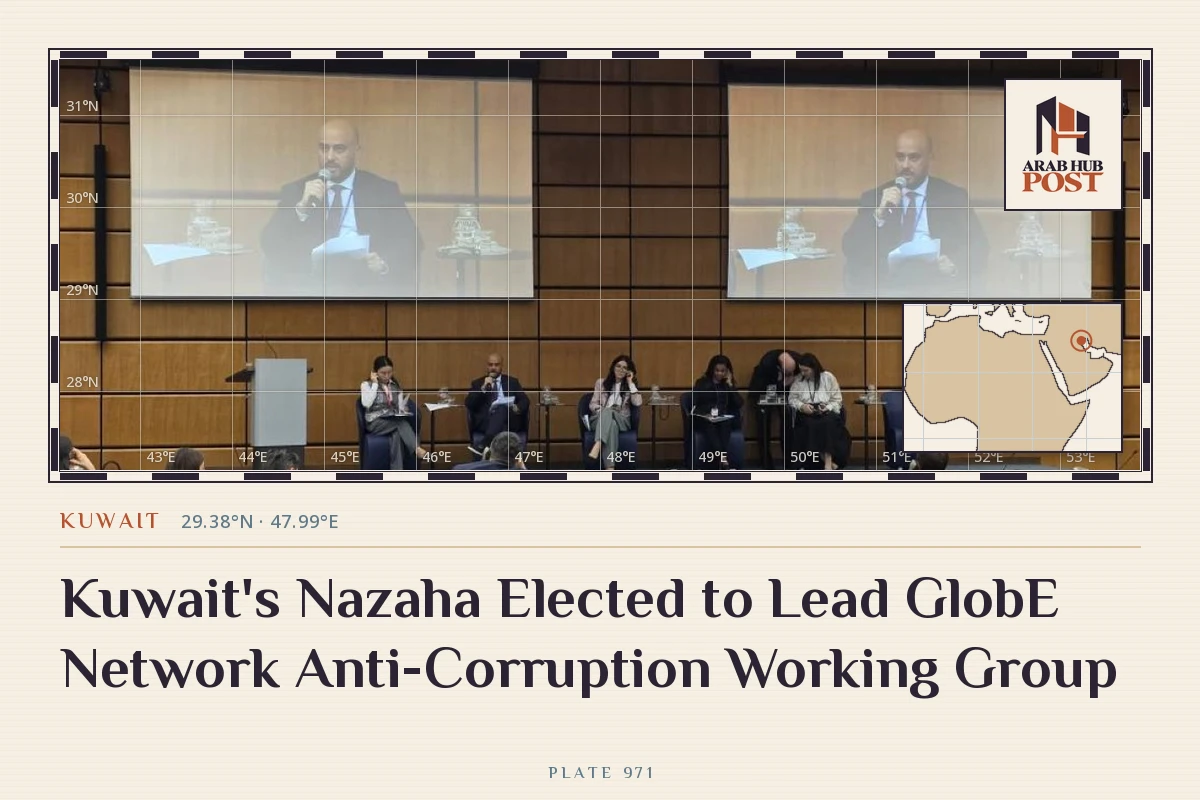
The election came after Kuwait took part in the network’s seventh General Assembly, held in Vienna from August 25 to 28. During the assembly, Kuwait shared its experience in international cooperation and in fighting cross-border corruption. It also highlighted its work to boost beneficial-ownership transparency and demonstrated its reporting system via the Sahel app. In addition, Kuwaiti officials held bilateral talks with anti-corruption counterparts from various countries to strengthen cooperation and exchange knowledge.
The vote was conducted in a video-conference meeting of the network on Wednesday. Going forward, Nazaha will direct the working group’s activities and liaise with the other working groups, the general secretariat and the steering committee to devise mechanisms for sharing knowledge and facilitating practical cooperation among law-enforcement agencies across the globe.


Reader comments
No comments on this report yet.