
Kuwait’s Shoreline Comes Alive with Autumn Bird Migration
Published Updated By Regional Desk
Migration Hotspot at the Crossroads
According to Sahar Moussa, Kuwait experiences a surge of bird activity along its shores as temperatures begin to fall. The coastline fills with birds travelling one of the world’s busiest migration routes. Situated at the northeastern tip of the Arabian Peninsula, Kuwait lies along a major flyway linking three continents. As a crossroads of Europe, Asia and Africa, the country serves as an important stopover for hundreds of bird species each autumn, making October one of the best months of the year for birdwatching.
Seasonal Visitors and Resident Species
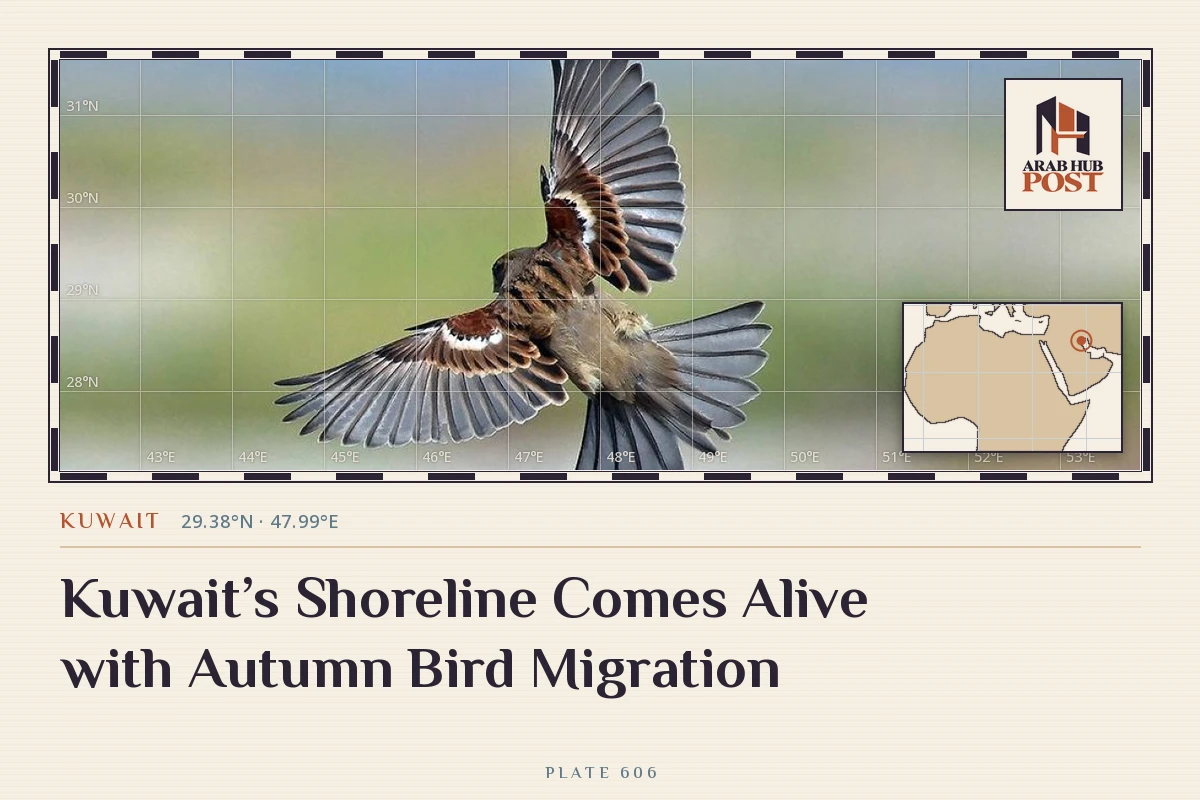
The Spanish sparrow (Passer hispaniolensis) is among the species commonly seen this season. While it breeds locally, its numbers rise sharply in the autumn as winter visitors arrive, gathering in flocks along the coast, on farms and in open country. By contrast, the white‑eared bulbul (Pycnonotus leucotis) is a familiar year‑round resident. Easily recognised by its distinctive white cheek patches and cheerful calls, it thrives in gardens, parks and coastal vegetation, adding colour and song to Kuwait’s urban and natural landscapes throughout the year.
Coastal Habitats Provide Vital Refuge
Along the shoreline, pigeons remain a constant presence, while gulls become increasingly plentiful as migrating and wintering species return from their northern breeding grounds. Kuwait’s beaches, mudflats and Kuwait Bay offer ideal places for birds to feed and rest before many continue their journeys or settle in the region for the winter. With more than 425 recorded bird species, Kuwait is regarded as one of the Gulf’s most important migration corridors. Every autumn, its beaches and wetlands highlight the country’s ecological importance, as resident birds and long‑distance migrants briefly share the same landscape before going their separate ways.




Reader comments
No comments on this report yet.