
GCC Chief Highlights Gulf-Asian Partnership as Driver of Economic Growth
Published Updated By Regional Desk
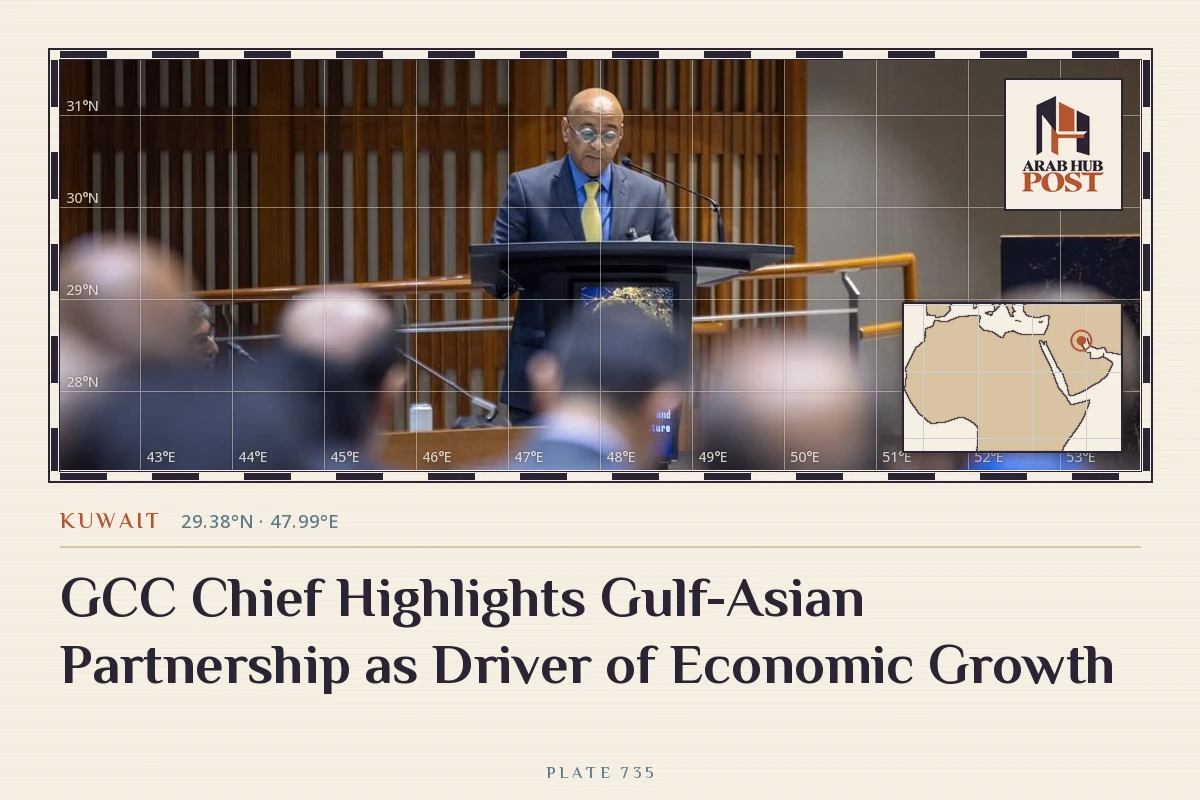
Kuwait’s GCC Secretary‑General Jassem Al‑Budaiwi said on Wednesday that the partnership between the Gulf Cooperation Council and Asian nations serves as a strategic pillar for boosting economic and investment cooperation, widening financial and banking integration, and advancing digital infrastructure.
He delivered these remarks at the opening of the Gulf‑Asian Economic Forum in Bangkok, Thailand, which was held under the theme “Banking, Investment and Digital Infrastructure.” The forum was organised by the Kuwait Banking Association and the Asian Bankers Association on the sidelines of the 2026 annual meetings of the International Monetary Fund and the World Bank Group.
Al‑Budaiwi noted that this cooperation contributes to sustainable development and shared prosperity.
He observed that the global economy is undergoing rapid change, with geopolitical developments increasingly linked to shifts in trade, investment and technology, underlining the need for reliable economic partnerships that can tackle challenges, guarantee sustainable financing and trade, and create wider opportunities for economic growth.
He highlighted that GCC economies have shown resilience in confronting economic and financial difficulties, supported by sound economic and fiscal policies, ample financial reserves, strong banking sectors, and continuing efforts to diversify their economies, build infrastructure and deepen Gulf economic integration.
Al‑Budaiwi affirmed that the long‑standing historical and trade ties between GCC states and Asian nations provide a solid foundation for building lasting economic and investment partnerships.
He added that combining Gulf financial and investment strength with Asia’s industrial and technological capacity and markets opens avenues for joint projects that promote knowledge transfer, technology localisation and greater economic added value.
He pointed out that economic diversification programmes across GCC countries are creating growing opportunities for Asian firms and institutions to take part in major development projects, while Asian markets offer Gulf institutions chances to expand their investments and international partnerships.
Three Pillars of Future Cooperation
Al‑Budaiwi set out three main pillars for strengthening economic ties between the two sides. The first pillar concerns logistics and infrastructure, aiming to improve connectivity between ports and economic hubs and to develop transportation and storage networks that facilitate trade and enhance the efficiency and resilience of supply chains.
The second pillar focuses on digital infrastructure and artificial intelligence, calling for expanded joint investment in data centres, cloud services and advanced technological applications, together with the exchange of expertise and knowledge to raise productivity, improve service efficiency and support digital transformation in both economies.
The third pillar centres on financial and banking cooperation, seeking to expand trade and project financing, create joint investment platforms, improve connectivity between capital markets and streamline cross‑border payments.
He stressed that providing reliable and efficient financing is essential to turn economic opportunities into viable investment projects.
He stressed that these numbers show the financial and economic power of GCC states and their ability to fund long‑term investments, back business expansion and build partnerships that have lasting impact.
He stressed that to turn the Gulf‑Asian partnership from exploration into concrete joint projects and investments, communication among economic and financial institutions must be strengthened, priority opportunities identified and practical steps put in place.
He also pointed out that the private sector is crucial for fostering innovation and converting economic ideas into real‑world development projects.
In conclusion, Al‑Budaiwi affirmed that shared economic interests and complementary capabilities between GCC countries and their Asian partners provide a solid foundation for raising economic relations to a higher level, serving mutual interests and fostering sustainable economic growth.
— KUNA



Reader comments
No comments on this report yet.