
Tripoli Grapples with Aftermath of Record Rainfall and Flooding
Published By Regional Desk
Immediate Impact
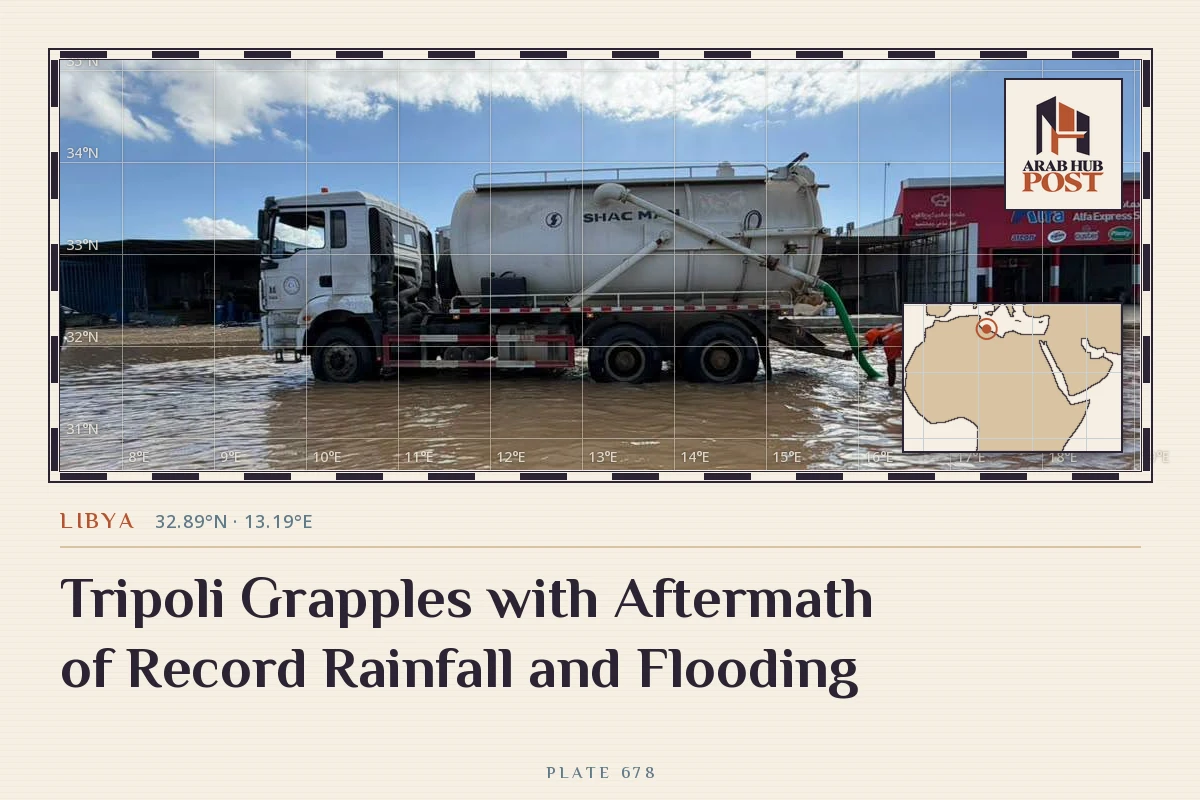
Libya’s capital, Tripoli, was still clearing away water after a heavy rainstorm the previous day inundated roads, highways, residences and businesses.
Libya, a North African state with significant oil reserves, often grapples with drainage shortcomings.
At least one person lost their life in the flooding, while numerous others managed to escape from vehicles that were afloat.
Witnesses described the scene as alarming, noting cars drifting on water, people swimming to safety, and homes and shops covered in a thick layer of mud that required clearing.
Martyr Square, a well-known landmark, was temporarily submerged by the waters.
Rainfall Figures
The downpour was described as extraordinary, with roughly 152 millimetres of rain recorded in a single day.
This amount stands against the country’s yearly average of 200‑400 millimetres and the typical October range of 25‑42 millimetres.
Contributing Factors
Flooded stretches of road and highway are a familiar problem in Libya, but the intensity of the rainfall in such a brief period put the drainage network to the test.
The prevalent habit of discarding litter on the streets contributed to blocked drains, worsening the situation as waste obstructed the flow.
Response, History and Public Reaction
By lunchtime the rain had moved on, sunshine returned and the Libya Herald reported that its teams could travel to most parts of Tripoli without hindrance.
Nevertheless, the usual trouble spots remained underwater.
Emergency crews were deployed from the previous day onward, and by the following day most—but not all—of the debris left by the flood and the clogged drains had been removed.
Historical records show that flooding has been a recurring issue since the Italian colonial period, persisted under Muammar Qaddafi’s rule and continues in the post-Qaddafi era.
The latest incident has revived the yearly debate over inadequately drained streets and blocked rainwater channels.
Many residents pointed out that, given Libya’s oil wealth and the year 2026, such flooding ought to be avoidable.
Yet the event occurred, and there is hope that the authorities have absorbed lessons from yesterday’s experience.
Officials acknowledge that climate change is a present reality and urge Libyan governments to incorporate this factor into planning.


Reader comments
No comments on this report yet.