
Brega Oil and OLA Energy Launch Tajoura Oil Depot Construction in Libya
Published By Regional Desk
Groundbreaking Ceremony and Participants
In Libya, Brega Oil Marketing Company hosted the groundbreaking ceremony for the Tajoura Oil Depot project on Wednesday morning.
The company said the initiative is part of its strategic plan for 2025–2029 and is being carried out together with OLA Energy.
Fouad Ali Balraheem, Chairman of Brega’s Board of Directors, greeted the Prime Minister’s envoy, who holds the post of Undersecretary at the Ministry of Local Government for Municipal Affairs, during the event.
The ceremony was attended by representatives from the National Oil Corporation, members of Brega’s board, general managers and department heads, the mayor of Tajoura Municipality, a delegate from OLA Energy, and other officials and stakeholders.
The western part of the country is a major market for petrol, diesel and other refined products.
Project Capacity and Facilities
The project aims to increase storage capacity, upgrade infrastructure and improve the efficiency of the supply and distribution system, with the goal of enhancing inventory management flexibility and strengthening operational capabilities.
Brega stated that the move represents a significant step toward developing oil infrastructure and boosting storage capacities, thereby supporting the efficiency of the supply and distribution network and meeting local market needs, especially in western Libya.
The project adds strategic storage capacity to the petroleum product storage and distribution system by constructing new tanks and upgrading handling and filling facilities, which improves supply stability and operational efficiency.
Brega added that the initiative marks a significant step in fulfilling its vision to modernise infrastructure and expand operational capabilities, ensuring supply sustainability and satisfying local market demand.
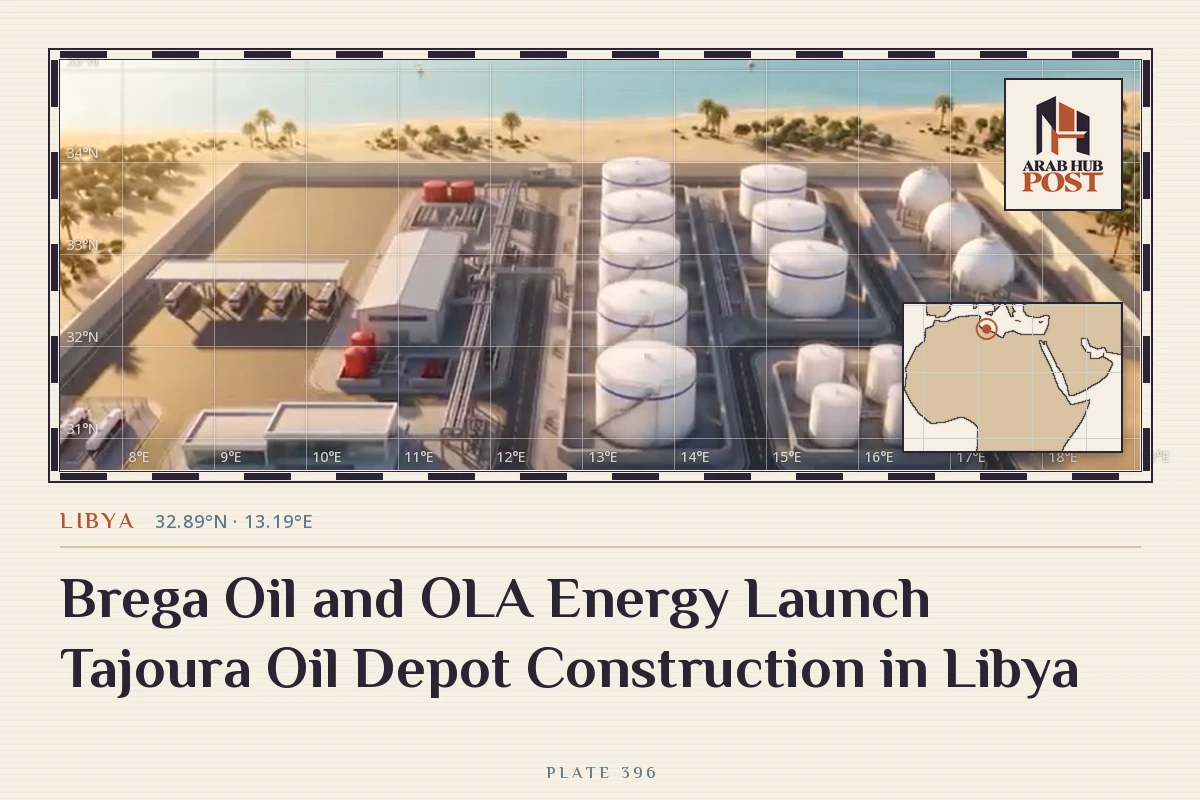
The development will provide storage tanks for petroleum products with a total capacity of 226,300 cubic metres, covering petrol, diesel, kerosene, jet fuel and cooking gas.
It also includes a rotary gas cylinder filling unit capable of processing up to 1,200 cylinders per hour and a truck‑loading platform that can handle up to 1,000 cubic metres per hour.
Additional works comprise two offshore discharge points, the laying of offshore and onshore pipelines, and the installation of firefighting, safety, control and electrical systems together with other operational facilities.
Implementation Model and Expected Outcomes
The project is being implemented under a Build‑Operate‑Transfer (BOT) arrangement with OLA Energy, a model intended to support the development of oil facilities and strengthen the readiness of the fuel supply system.
Upon completion and the start of operations, the project is expected to increase storage capacity, enhance the efficiency of supply and distribution operations, lower fuel transportation costs, support supply stability and meet local demand.
The initiative forms part of broader efforts to develop oil infrastructure and improve the efficiency of the supply and distribution system so it can keep pace with future needs.



Reader comments
No comments on this report yet.