
At Doha forum, Lesotho PM urges private-sector partnerships to support balanced global economy
Published By Arab Hub Post Staff
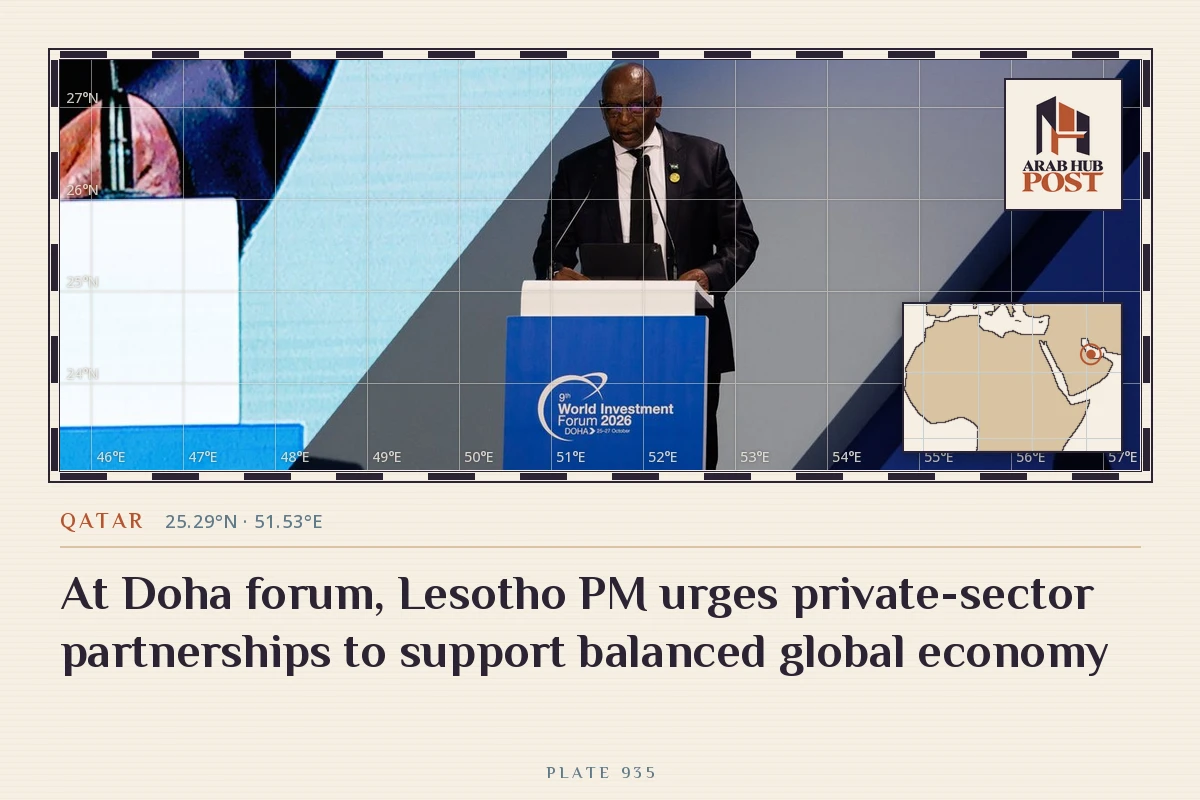
Qatar’s capital, Doha, hosted the 9th World Investment Forum 2026, where Samuel Matekane, Prime Minister of the Kingdom of Lesotho, said that stronger partnerships between private sectors in developed and developing countries can help sustain a balanced global economy.
Investment landscape at a critical juncture
In a special address to the forum, Matekane described the global investment landscape as being at a critical juncture and undergoing profound change, driven by rapid technological progress, changing international trade flows, climate-related pressures, geopolitical uncertainty and growing strain on funding for development projects.
He said these conditions expose the weaknesses of developing nations, especially the least developed countries, but also create fresh openings for investment focused on trade and business rather than dependence on aid.
The prime minister stressed the value of joint ventures and close commercial partnerships in providing adequate finance for small, medium and micro enterprises, which he called a basic pillar of economic development.
Local economies and human capital
Matekane called for stronger local and regional supply chains and for effective connections between foreign investors and local exporters. Investment, he said, should not be isolated from the local economy; it must support the transfer of knowledge, build local capabilities, create jobs and help enterprises take a more active part in regional and global value chains.
He also underlined the link between investment and human capital development, noting the growing digital transformation of economies and the changing nature of production systems. Young people, he said, now need technical, entrepreneurial and digital skills to seize emerging economic opportunities, and investing in individuals is as important as investing in physical infrastructure.
By bringing together capital, knowledge, technology and skills, countries can build productive and competitive economies, he added. Development aid should complement and stimulate productive private investment, particularly where funding gaps, inadequate infrastructure and risk assessments restrict investment flows.
A call to invest in the future
Matekane said the forum’s theme, “Investing in the Future,” invites the international community to look beyond short-term financial returns and consider the creation of a better global economy for generations to come.
He described a future in which landlocked developing countries are no longer permanently limited by geography, least developed countries receive support to remove structural barriers to global trade, and micro, small and medium-sized enterprises gain access to world markets. Regional cooperation, he added, could turn geographical constraints into opportunities for shared prosperity, and the international community must recognise that sustainable global growth depends on the active participation of all economies.
The prime minister urged a commitment to mobilise investment that transforms economies, strengthens partnerships, expands trade and ensures that no country is left behind.
Reader comments
No comments on this report yet.