
IMF Flags Saudi Arabia Attacks as Risk to Global Economic Stability
Published By Arab Hub Post Staff
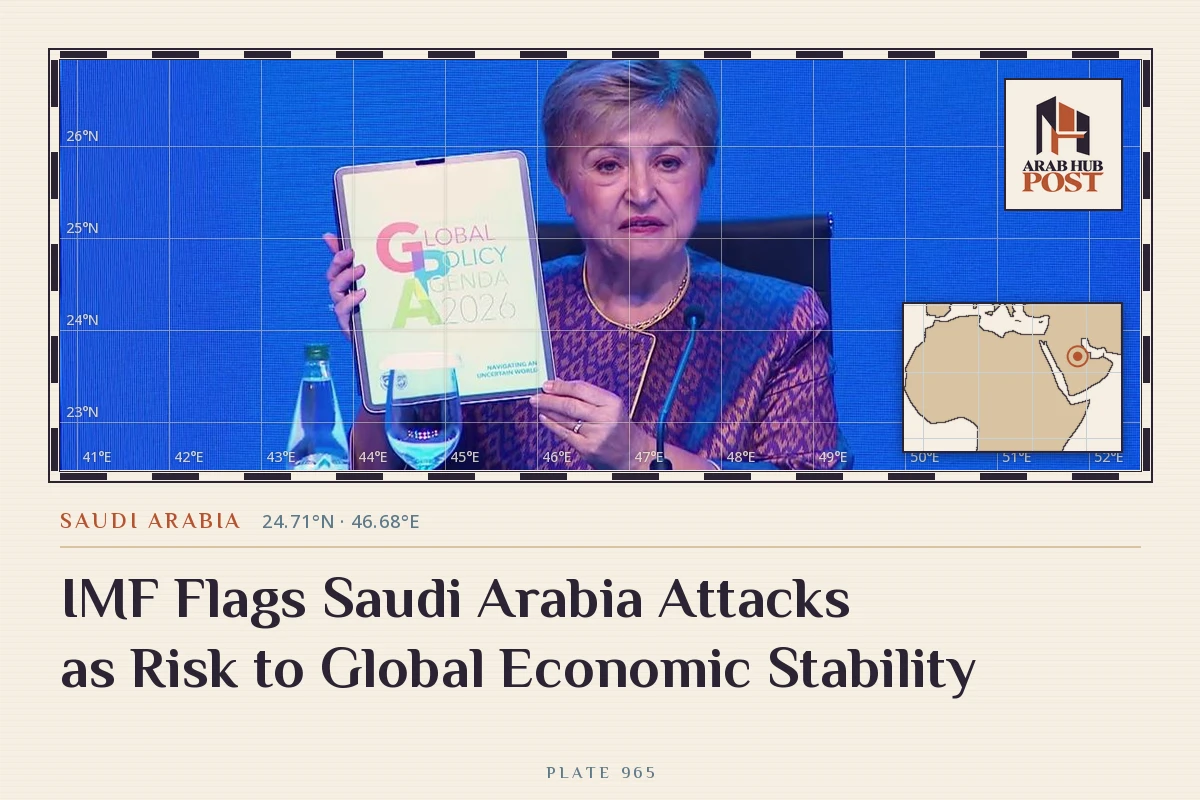
Saudi Arabia’s recent attacks have been highlighted by the IMF Managing Director as a potential source of worldwide economic repercussions. According to the International Monetary Fund (IMF), Kristalina Georgieva warned that the Kingdom’s importance to regional and global economies means any disruption could spread internationally, especially amid energy market disturbances linked to the Middle East war. The Gulf region, a key oil exporter, lies at the heart of current Middle Eastern tensions.
GCC Reforms and Resilience
She made these remarks at a press conference in Bangkok on the sidelines of the 2026 annual meetings of the IMF and the World Bank Group. Georgieva noted Saudi Arabia’s significant economic role both regionally and globally, cautioning that recent developments could harm economies worldwide.
She pointed out that Gulf Cooperation Council countries have introduced economic and financial reforms aimed at boosting resilience to external shocks. These measures include diversifying sources of growth, building up reserves and creating fiscal buffers to absorb crisis impacts.
Opposing Forces Shaping Global Growth
Presenting the IMF’s Global Policy Agenda for 2026, Georgieva warned that the global economy’s capacity to endure repeated shocks and uncertainty is nearing its limit. She said energy reserves and fiscal buffers are being depleted while inflation stays high in many nations, although some economies gain from rising investment in artificial intelligence.
Georgieva described global growth as being shaped by two opposing forces: a negative energy supply shock stemming from the war in the Middle East and a positive demand shock driven by expanding AI investment. She observed that economies more deeply integrated into AI supply chains are outperforming others, noting many of these are in Asia, together with energy‑exporting nations that remain outside the conflict zone.
Debt Burdens and Policy Advice
Low‑income, fragile and conflict‑affected states are bearing the heaviest economic costs, especially those that import energy and cannot benefit from the technology boom. She warned that AI expansion could widen the gap between wealthy and developing countries, amid falling international development aid and rising borrowing, food and energy expenses.
She noted that debt‑servicing burdens in developing countries have risen on average from six percent to 14 percent of government revenues over the past decade. Georgieva said advanced economies are falling short in addressing fiscal imbalances this time around and urged governments to enact urgent reforms before the gaps widen further by strengthening revenues, rationalising expenditure and improving public financial management.
Georgieva also stressed that government assistance should be targeted at those most affected by rising food and energy prices rather than applied as broad‑based price subsidies. Protecting the most vulnerable while avoiding policies that drain public resources is essential, she added, as governments’ capacity to respond to economic shocks diminishes.
Reader comments
No comments on this report yet.