
Iraq’s Finance Minister Meets IMF Leaders in Bangkok to Address Economic Pressures
Published Updated By Regional Desk
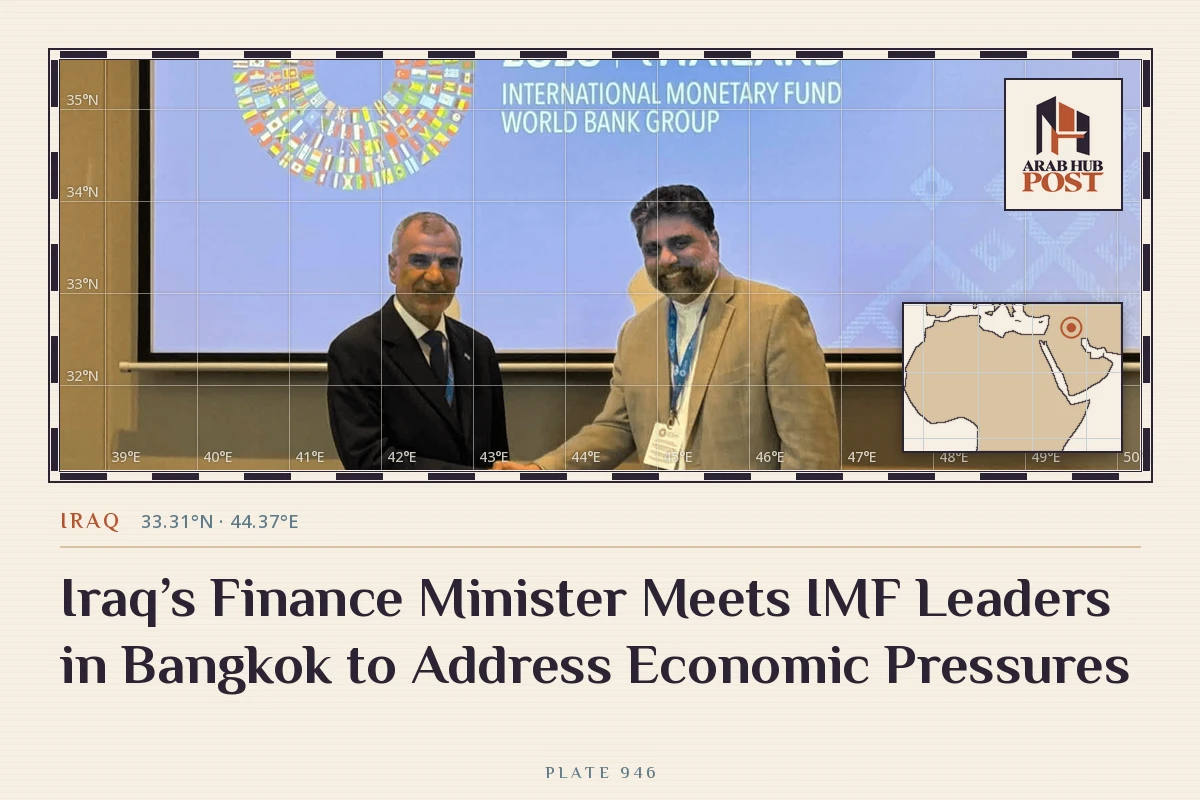
Meeting in Bangkok and IMF‑World Bank Talks
Baghdad (IraqiNews.com) – Iraq’s Finance Minister Falih Al‑Sari met with senior International Monetary Fund officials in Bangkok as the government faces mounting economic strain from the regional conflict and disruptions to oil shipments through the Strait of Hormuz. Al‑Sari is attending the annual meetings of the International Monetary Fund and the World Bank Group, where talks have centred on Iraq’s financial outlook, economic reforms and efforts to develop the private sector.
Economic Challenges, Reform Plans and Private‑Sector Focus
The discussions come at a crucial moment for Iraq, whose economy relies heavily on oil revenue to fund government spending. The disruption to Hormuz shipping has raised concerns about export earnings, state finances and the country’s ability to sustain economic activity amid the regional crisis.
According to the Finance Ministry, Al‑Sari acknowledged the economic implications of the Hormuz situation and said the government is devising both short‑term and long‑term strategies to mitigate its effects.
The Minister expressed optimism that Iraq could achieve key financial reforms over the next two years, stressing the need to cooperate with international financial institutions.
During the meetings, Al‑Sari held talks with IMF executive director Mohamed Maait, who represents Iraq and other regional countries, as well as incoming executive director Ali al‑Hosni. Nizar Nasser Hussein, Governor of the Central Bank of Iraq, also participated.
The conversations covered Iraq’s economic and budgetary situation, reform objectives and prospects for stronger collaboration with the IMF.
Separately, Al‑Sari met with Ali Abbas, an IMF technical assistance officer, to discuss ways to improve Iraq’s financial policies and institutional capacities.
The Finance Minister also emphasised the need to ease pressure on Iraqi firms and stimulate private investment as the government works to reduce the economy’s dependence on state spending and oil income.
Broader Economic Goals
The discussions underline the necessity of strengthening public finances and expanding non‑oil economic activity in Iraq, given that the conflict and interruptions to regional trade have exposed the country’s vulnerability to external shocks.
Reader comments
No comments on this report yet.