
Gulf Oncologists Discuss Personalised Breast Cancer Care at Kuwait-Led Workshop
Published By Regional Desk
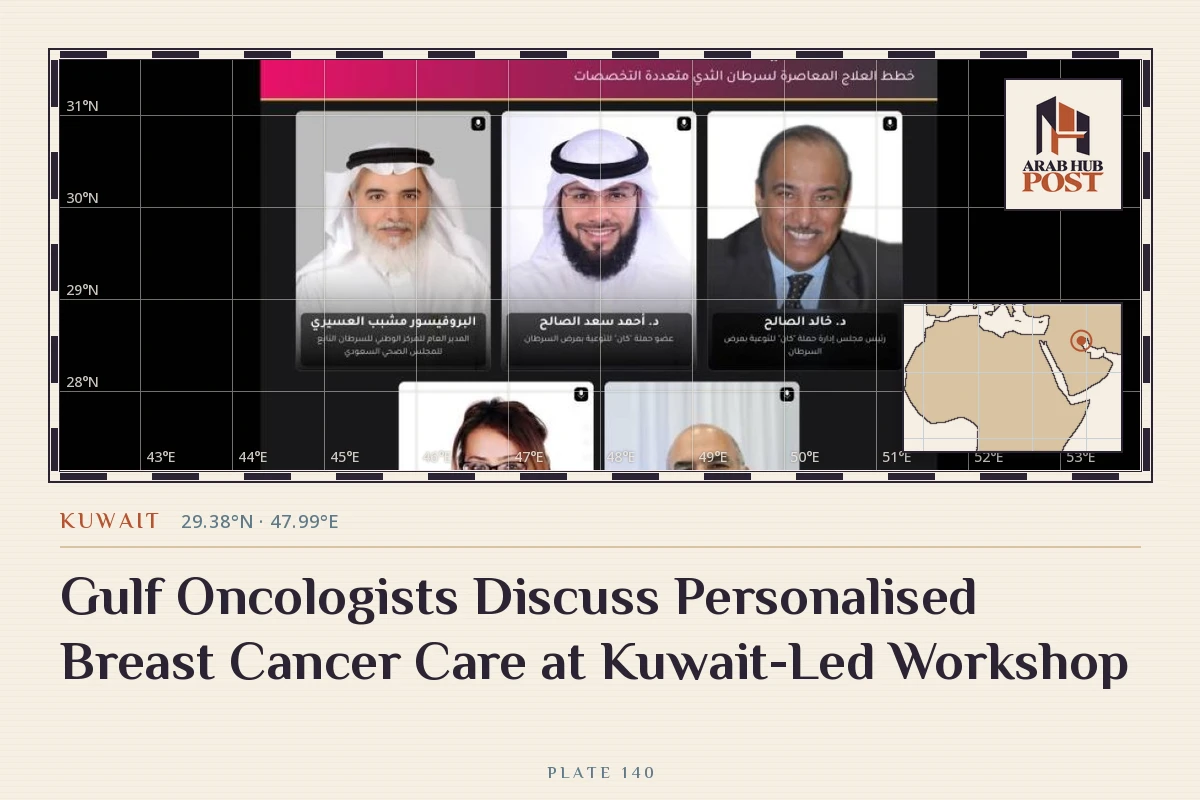
Kuwait hosted an online workshop on Monday titled “Breast Cancer 2026 – From Evidence to Practice,” organised by the National Cancer Awareness Campaign (CAN). The event brought together specialists from the Gulf Cancer Federation representing Kuwait, Saudi Arabia and Bahrain to examine the latest developments in breast cancer treatment and their real-world implementation.
Regional Cooperation in Focus
CAN Chairman Dr Khaled Al-Saleh said in a statement that the workshop underscored the value of collaboration among Gulf Cooperation Council (GCC) states, medical institutions and experts in the fight against breast cancer. He noted that stronger regional integration enables access to cutting-edge treatment technologies, while the sharing of knowledge and expertise among healthcare professionals enhances the quality of care for patients throughout the region.
Dr Ahmed Al-Saleh, a CAN member, pointed out that while breast cancer treatment is evolving quickly, translating scientific advances into improved patient outcomes requires multidisciplinary teamwork, ongoing professional training and treatment plans tailored to each individual’s needs.
Advances in Radiotherapy and Surgery
The workshop’s scientific programme, he explained, brought together specialists in medical, radiation and surgical oncology to review current treatment strategies, their practical applications and ways to strengthen information exchange among clinicians. The event concluded with an interactive session titled “Ask the Experts: Breast Cancer Management in 2026,” where participants posed questions, discussed real-world challenges and shared perspectives with the speakers.
Dr Maha Al-Sindi, consultant medical oncologist and head of the Training Department at the Bahrain Oncology Center of the Royal Medical Services, stated that breast cancer care is increasingly shifting toward selecting treatments based on the biological characteristics of each tumour rather than applying a one-size-fits-all approach. This method, she said, allows physicians to identify the most appropriate options by weighing effectiveness, potential side effects and the patient’s individual response. Al-Sindi stressed that accurate diagnosis and tests to determine the tumour’s nature are critical for choosing the right treatment and improving outcomes.
Professor Mashabeb Al-Asiri, director general of the National Cancer Center of the Saudi Health Council and CEO of the Saudi Center for Proton Therapy, said progress in radiotherapy now makes it possible to shorten treatment duration and reduce the number of sessions for selected patients while maintaining efficacy and safety, based on scientific evidence and patient-selection criteria. He explained that modern techniques can deliver radiotherapy over shorter periods in suitable cases and target radiation more precisely to the areas needing treatment, thereby limiting exposure to healthy tissue and reducing side effects. Al-Asiri emphasised the importance of selecting the right technology for each patient, balancing effective disease control with preserving quality of life.
Dr Aws Al-Aziri, consultant in breast cosmetic and oncological surgery and head of the Surgical Department at Al-Sabah Hospital, said contemporary breast cancer surgery increasingly aims to minimise lymph node surgery whenever clinically appropriate. He described this as a significant move toward choosing the safest and most suitable procedure for each patient rather than automatically opting for more extensive surgery. Al-Aziri noted that avoiding unnecessary procedures can lower the risk of complications such as arm swelling, pain and restricted movement, helping to preserve patients’ quality of life after treatment.

Reader comments
No comments on this report yet.