
Qatar Launches Environmental Monitoring Programme at Winter Camping Sites Ahead of 2026–2027 Season
Published By Regional Desk
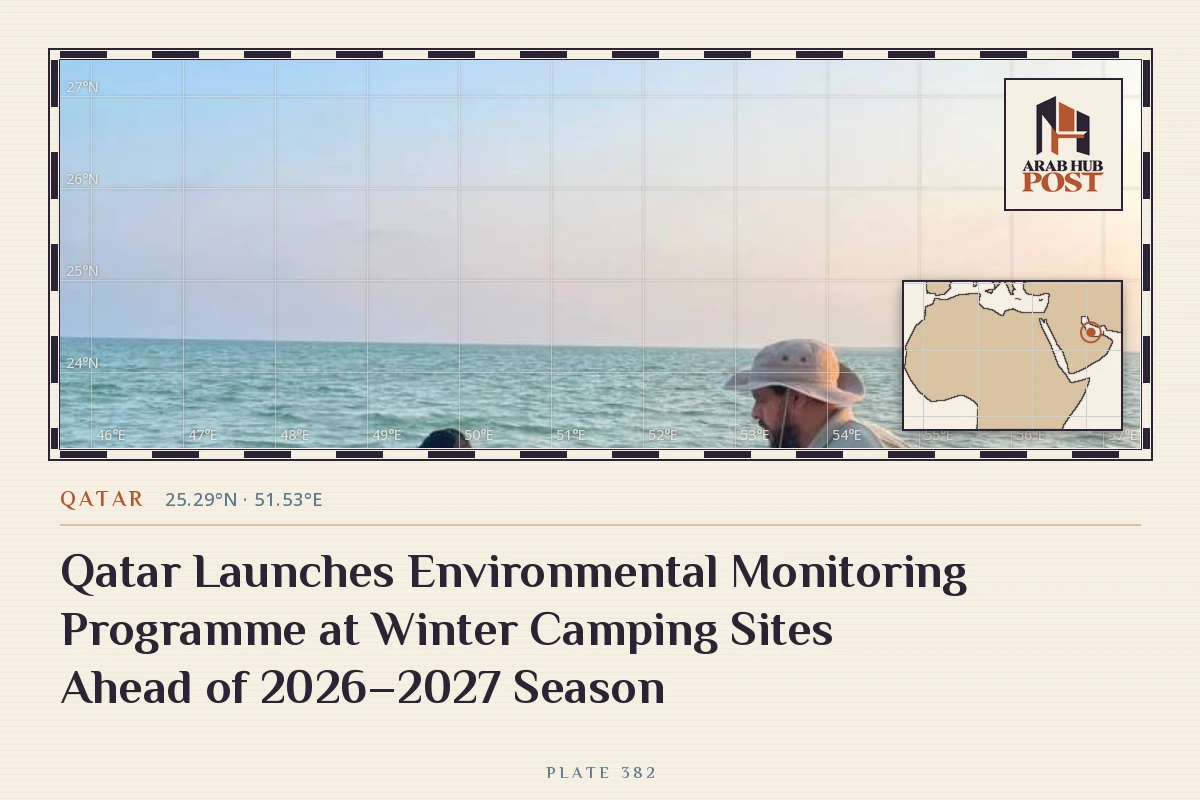
The Ministry of Environment and Climate Change in Qatar has launched an environmental quality monitoring programme at winter camping sites across the country to prepare for the 2026–2027 season.
Monitoring Programme Overview
The initiative, run by the Environmental Monitoring and Inspection Department’s Marine and Soil Quality Section, aims to assess conditions at selected locations before the season starts and track any changes that may occur during and after the period.
Sites and Sampling Details
Monitoring covered northern Qatar and Al Jumail, Ras Ushairij, Ras Brouq, Zekreet, Salwa, Sealine and Khor Al Adaid. The programme included four monitoring points at Ras Ushairij, three at Ras Brouq, three in the northern areas and Al Jumail, four at Zekreet, and three sites each in Salwa, Sealine and Khor Al Adaid.
Activities involve collecting seawater, soil, marine sediments and marine plankton samples, conducting field surveys, taking measurements and performing laboratory analyses in line with the Ministry’s approved procedures.
Programme Phases
The work is divided into three stages: pre‑season monitoring to establish baseline environmental data, in‑season monitoring to observe potential variations, and post‑season assessment to evaluate outcomes and compare results.
Official Comments
Engineer Hassan al-Qasimi, director of the Environmental Monitoring and Inspection Department, said the programme reflects the Ministry’s approach to strengthening environmental oversight in areas experiencing seasonal activities and linking field monitoring with continuous assessments of environmental conditions. He noted that this approach helps identify changes early and address them in accordance with approved procedures. He added that monitoring sites across the country strengthen the Ministry’s ability to regularly assess environmental conditions and protect the marine environment, soil, and associated natural resources.
Abdullah al-Khalifi, deputy director of the Environmental Monitoring and Inspection Department, said conducting monitoring activities before, during and after the camping season allows results from the different phases to be compared, helping determine the nature of environmental changes and their potential association with seasonal activities. He explained that these comparisons provide a scientific basis for environmental monitoring and support the adoption of appropriate measures when necessary. They also help improve the effectiveness of environmental oversight by ensuring that observations and follow‑up actions are based on accurate field data and results.
Dr Mai al-Ghanem, head of the Marine and Soil Quality Section, said the programme’s technical work involves collecting samples of seawater, soil, sediments and marine plankton and conducting measurements and analyses using approved methodologies. She explained that data collected before the camping season would serve as a scientific baseline for the selected sites. These records would be used to analyse results obtained during and after the season, helping determine the extent of changes affecting the environmental elements covered by the programme.




Reader comments
No comments on this report yet.