
Oman Takes Part in WHO Eastern Mediterranean Committee Meeting in Cairo
Published By Regional Desk
Oman’s Participation and Leadership
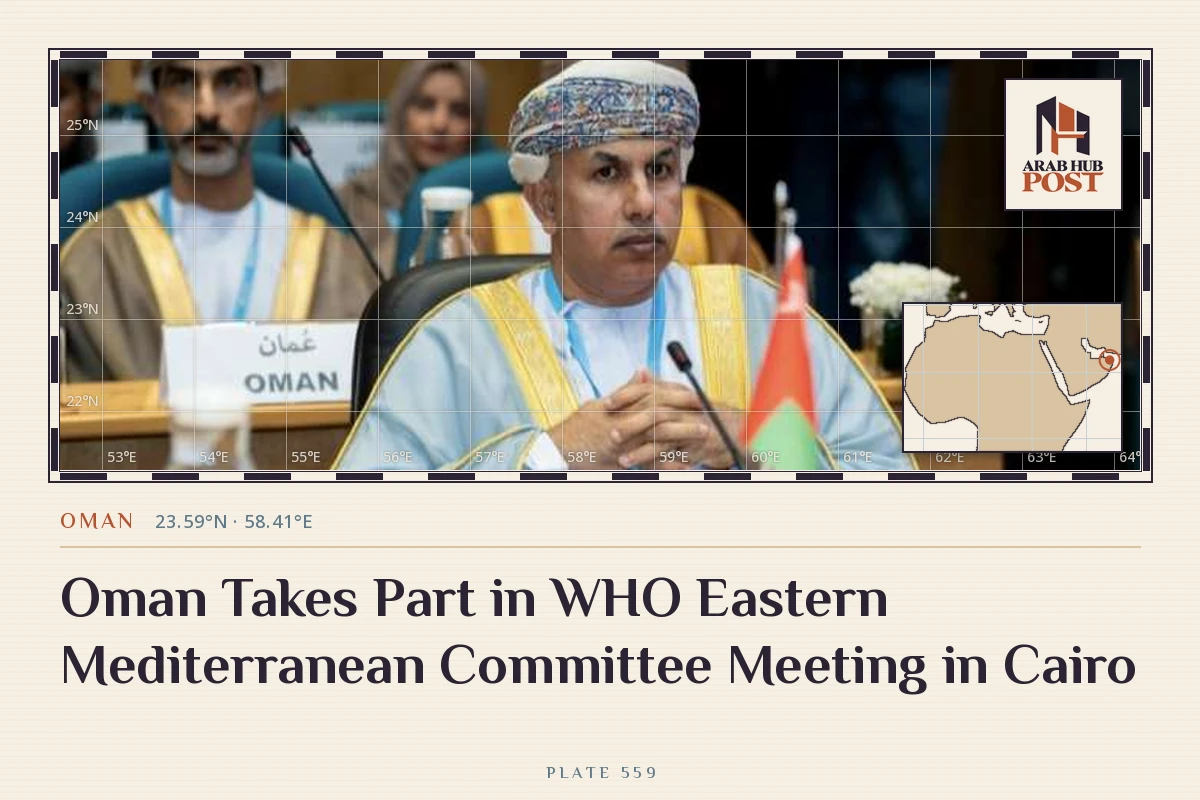
Oman took part today in the 73rd session of the WHO Regional Committee for the Eastern Mediterranean, which is being hosted by Egypt in Cairo and attended by health officials from across the region.
The Omani delegation is led by Dr Hilal Ali Al Sabti, Minister of Health and Vice‑Chairman of the Committee’s Bureau.
Minister’s Statement and Priorities
Under the theme “Together for a Healthier Future: Action, Access, Equity,” the meeting provides a forum for leaders from the WHO Eastern Mediterranean Region to discuss shared public‑health challenges and coordinate actions for a healthier future.
In his address, Dr Hilal Al Sabti stressed the need for sustained investment in resilient health systems grounded in primary care and universal coverage, guaranteeing uninterrupted services and fair access, especially for vulnerable groups and those affected by crises.
He said Oman continues to turn these priorities into concrete national measures.
Regarding prevention and health security, the Sultanate has kept polio immunisation rates above 99 % while bolstering surveillance, preparedness and response capabilities.
Oman also pursues actions against antimicrobial resistance in line with the 2022 Muscat Ministerial Declaration, applying a One Health framework and encouraging multisectoral cooperation.
The minister highlighted digital transformation, data and artificial intelligence as strategic levers to advance health systems throughout the region, urging clear governance structures, improved interoperability and responsible, trustworthy use of technology to raise care quality and support evidence‑based decisions.
He noted that these steps correspond with the report’s goals of expanding digital technology use, fostering knowledge exchange and strengthening evidence‑based policymaking.
Dr Al Sabti added that regional challenges demand greater solidarity, joint action, increased sharing of expertise and data, capacity‑building and support for countries facing conflict or emergencies.
He also emphasised the protection of health workers and facilities and the maintenance of essential services for affected populations.
In closing, he reaffirmed Oman’s backing of the Regional Office’s work and its commitment to ongoing cooperation with WHO and member states to turn the report’s recommendations into tangible, sustainable results that improve health across the region.
Agenda Items and Procedural Matters
The meeting’s agenda covers a series of discussions on health issues throughout the WHO Eastern Mediterranean Region, with special attention to the key challenges confronting the area.
Sessions will examine new approaches to guide decisions that improve the region’s health outlook.
Participants will review various health‑related papers, exchange information, views and expertise on matters of concern, and adopt decisions aimed at strengthening healthcare and raising the quality of health services across the region.
Routine procedural business includes the election of the Committee’s Bureau, adoption of the agenda and the appointment of a Credentials Committee.
The WHO Regional Director for the Eastern Mediterranean presented the Annual Report for 2025/2026.
Among the topics slated for debate are advancing health financing to enhance financial protection in the Eastern Mediterranean Region, a multi‑communicable disease elimination strategy for the region, health emergencies in the Eastern Mediterranean Region and the significance of polio eradication in the area.
The closed session on the second day will centre on the State of Kuwait Foundation Prize for the Control of Cancer, Cardiovascular Diseases and Diabetes in the Eastern Mediterranean Region and the Dr A.T. Shousha Foundation Prize, with discussion also on a possible change to the award frequency.
Further, attendees will assess technical resolutions and governance matters, examine the proposed Programme Budget for 2028–2029 and consider regionally relevant resolutions and decisions adopted by the Seventy‑ninth World Health Assembly and the Executive Board at its 158th and 159th sessions, while also reviewing the provisional agenda for the 160th session of the WHO Executive Board.
On the final day a panel discussion will be held under the title “Artificial Intelligence for Health in the WHO Eastern Mediterranean Region: Priorities and Considerations.”
Oman’s Commitment and Outlook
Oman’s participation in these proceedings underscores its dedication to supporting global health initiatives and deepening its partnership with international organisations, especially the World Health Organization, as it works toward a more sustainable health future for the region and the world.

Reader comments
No comments on this report yet.